How to Become a Medical Resident in Germany as a Foreign Doctor: The 7 Steps
The whole road from medical school to your first Assistenzarzt job, in seven steps. What each step really asks for, what changes by Bundesland, and where most people get stuck.
Ahmed Quteishat
Founder, Klaro
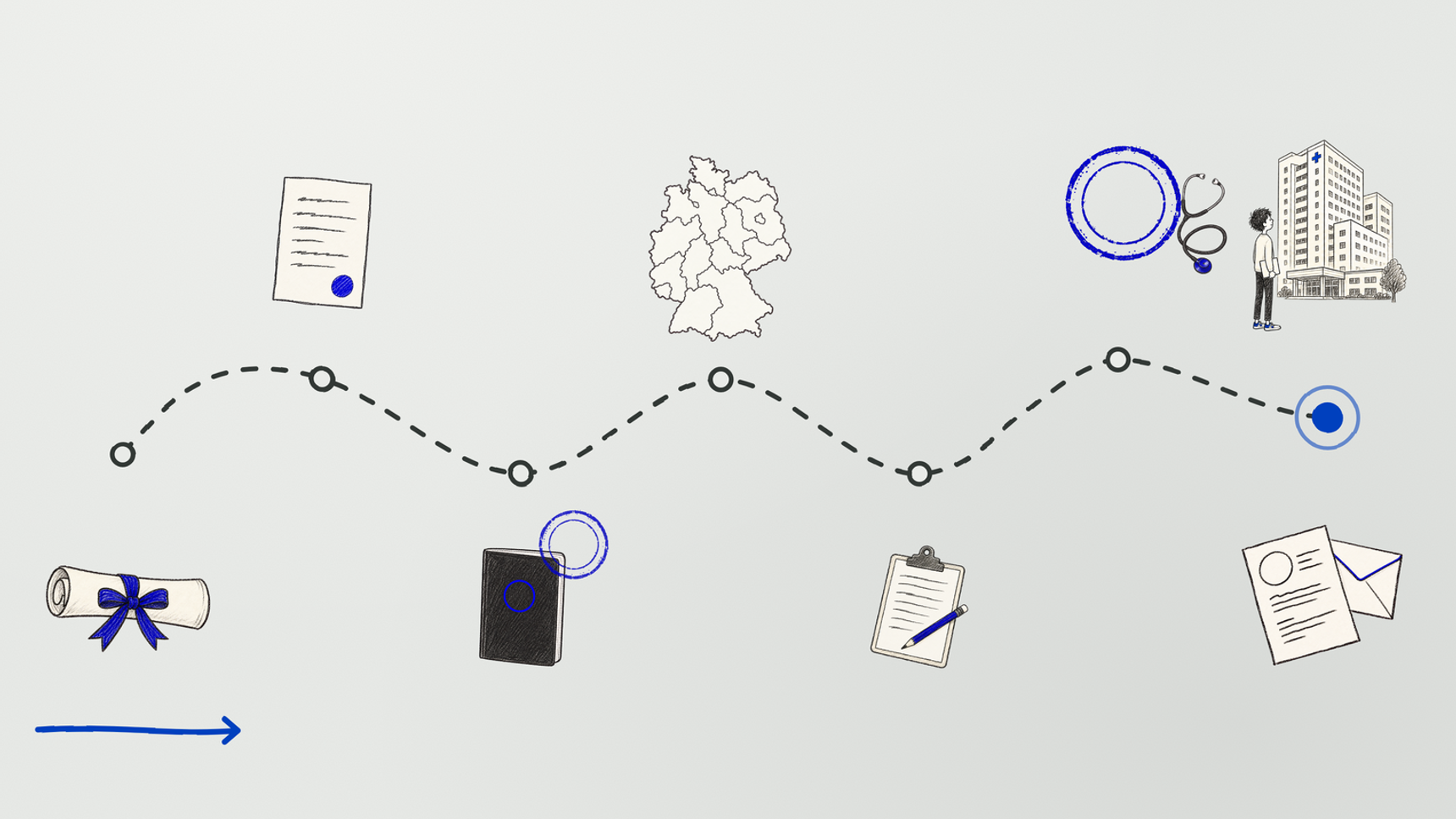
I made a 60-second video with the seven steps to become a medical resident in Germany. Sixty seconds is enough for the list. It is not enough for the details, and the details are where people lose months. This is the long version.
I went through every one of these steps myself. I finished medical school in Cluj-Napoca in August 2024, got my Approbation in February 2025, started my first job in April 2025, and moved to a bigger hospital in Berlin in 2026. Where I give a date or a number below, it is my own. Where a rule depends on the Bundesland, I say so, because it usually does.
The short version
- Step 1: finish medical school, but start the process before your diploma arrives.
- Step 2: get a B2 German certificate.
- Step 3: sort out your visa, or find out that you do not need one.
- Step 4: choose the Bundesland where you will apply for recognition.
- Step 5: pass the exams, the Fachsprachprüfung and, for many non-EU graduates, the Kenntnisprüfung.
- Step 6: receive the Approbation, your full German licence.
- Step 7: find a job yourself, because Germany has no matching system.
Now each step properly.
Step 1: finish medical school, but do not wait for the diploma
The biggest mistake I see is doctors who finish medical school, then sit and wait for the diploma, then start thinking about Germany. That costs a year for nothing.
I chose the Germany route at the end of 2023, in my fifth year, when I still had no diploma. Everything that does not need the diploma can be done before it arrives:
- Learning German. This is the slowest part of the whole process, so it should start first.
- Collecting the documents. Every Approbation authority wants roughly the same set: your diploma and transcript, a certificate of good standing from your home medical authority, a police clearance certificate, a recent medical certificate saying you are fit to practise, a tabular CV, your birth certificate, a copy of your passport, and proof of German. Documents from outside the EU normally need an apostille or legalisation, and everything that is not in German needs a sworn translation.
- Reading the rules of the Bundesland you are thinking about, so you know what its authority asks for before you apply.
My diploma arrived in the middle of December 2024. I filed my Approbation documents on 17 January 2025. That was only possible because everything else was already done.
One small story about the documents. My first medical certificate was rejected, because the doctor who issued it was still in residency. I had to get a new one and send it again. It cost me about a week. Small details like this are where the process slows down, not the big steps.
Step 2: German, and the B2 certificate
To apply for the Approbation you need a general German certificate at B2 level. Goethe, telc, ÖSD and TestDaF are all accepted. Later, for the Fachsprachprüfung, you need medical German at C1 level, but the B2 certificate is what the authority checks first.
In the video I said you do not really have to speak B2, you just need the certificate. That is true for the paperwork. The authority looks at the paper, not at you. But be honest with yourself: from your first day in a German hospital you will speak German to patients, nurses and colleagues all day. The certificate gets you in. The language keeps you there.
How I learned it: almost entirely passively through 2024. German YouTubers, the Language Reactor extension in Chrome, and the SmarterGerman course from A1 to B1. No language school. I passed the B2 exam in September 2024 with a good score, and honestly I was already close to B2 before I realised it. That only works if you start early, which is why this step belongs in your fourth or fifth year, not after graduation.
Step 3: visa
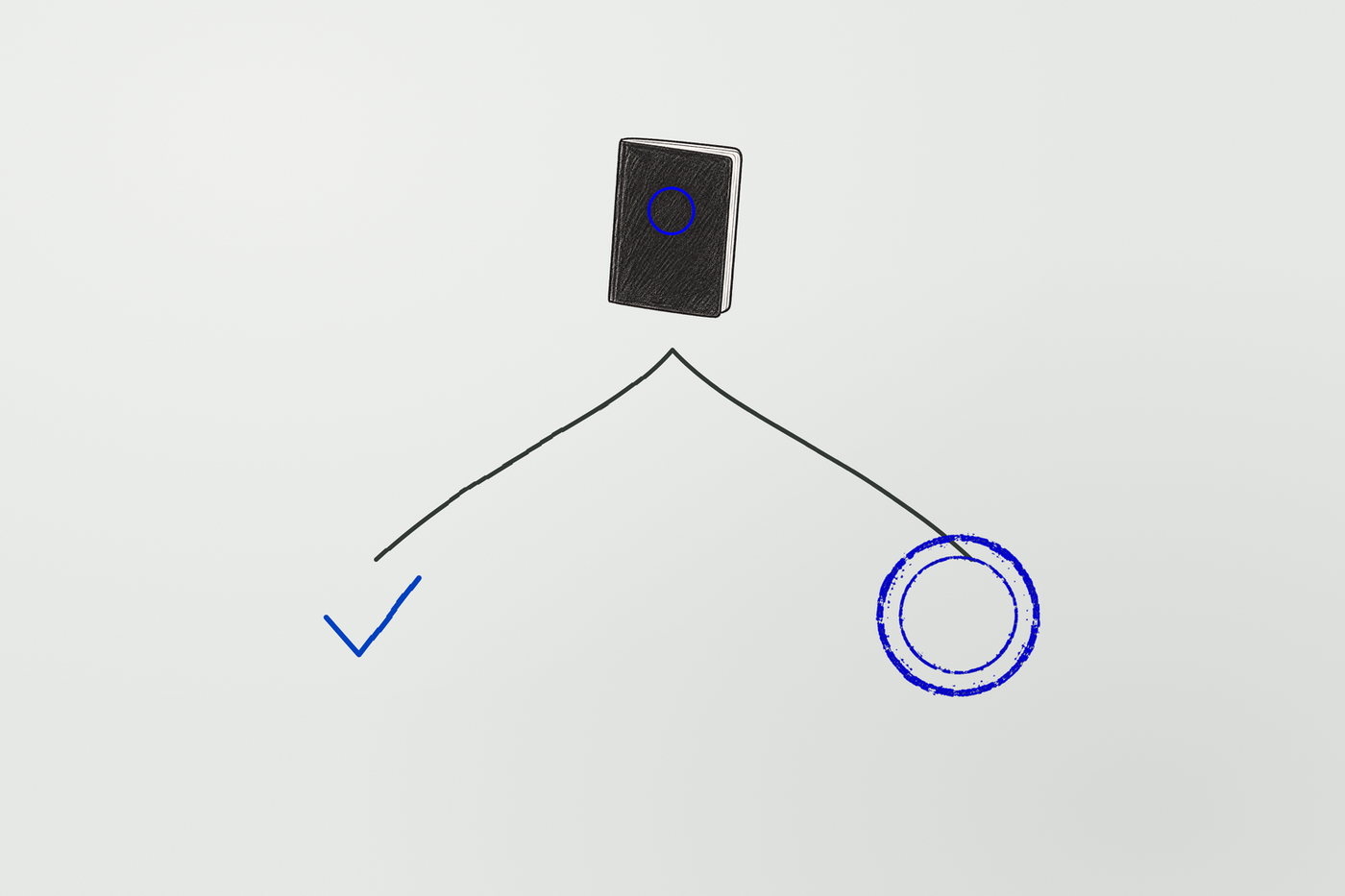
This depends on your passport, not on where you studied.
If you are a citizen of an EU or EEA country or Switzerland, you do not need a visa. You can move to Germany, register your address, and start. For me there was no visa step at any point.
If you come from outside the EU, you will need a residence permit. The usual route for doctors is the visa for the recognition of foreign professional qualifications, section 16d of the German residence law. It lets you live in Germany while you complete the exams, and in many cases you can already work under a temporary permit called the Berufserlaubnis while you wait for the full Approbation. Once you have a job contract and the Approbation, you switch to a work permit or the EU Blue Card.
I did not go through this route myself, so I will not pretend to know every detail. The rules for skilled workers changed in 2024 and can change again. Check the current requirements on the website of the German embassy in your country before you plan around them.
Step 4: choose your Bundesland carefully
Germany has sixteen states, and each one has its own authority for the Approbation. Once you have the Approbation it is valid in all of Germany, but you apply in one state, normally the one where you plan to work.
The states do not work the same way. They ask for slightly different documents. Some want proof that you intend to work in that state, for example a job offer or a letter from a hospital. They schedule the exams differently. And the waiting times are very different, from a few months in one state to more than a year in another.
What I did: I applied in Schleswig-Holstein in 2024. Two reasons. At that time it accepted the telc C1 Medizin certificate instead of the official Fachsprachprüfung, which saved me months. And I applied before that office became overwhelmed with applications, which it did later. That was 2024. Rules differ by state and they change, so check whether this still applies before you copy it.
When you choose, look at four things: the current waiting time, whether the authority wants a job offer before it will process you, whether it accepts the language certificate you already have, and whether you actually want to live and work there. You can only run one application at a time, so this decision matters more than it looks.
Step 5: the exams
There are two exams, and which ones you need depends on where you studied.
The Fachsprachprüfung, or FSP, is the medical language exam. Everyone who did not study medicine in German takes it, EU graduates included. It is run by the Ärztekammer of your state and takes about an hour in three parts: a conversation with a patient, written documentation of that case, and a presentation of the case to another doctor. The level is C1 medical German.
The Kenntnisprüfung, or KP, is the knowledge exam. It is for graduates from outside the EU whose training the authority does not consider equivalent to a German degree. It is an oral and practical exam, mainly in Innere Medizin and Chirurgie, plus a third area that depends on the state.
If you graduated in the EU, the EEA or Switzerland, your degree is recognised automatically and you normally only need the FSP. If you graduated outside the EU, the authority first checks whether your training is equivalent. In practice most non-EU graduates end up taking the KP, and many of them work under a Berufserlaubnis while they prepare.
My route was the FSP only, because my degree is from Romania. I passed the telc C1 Medizin in October 2024 on the first try. I prepared for about three weeks, three to four hours a day, almost entirely with ChatGPT in voice mode: patient history role-play, writing case summaries, and doctor-to-doctor conversations. It is not a language school, but it is available at midnight and it does not get tired.
Step 6: the Approbation
The Approbation is the full German medical licence. It has no time limit and it is valid in every state. Everything before this step exists to get you here.
My timeline: I filed the documents on 17 January 2025 and received the Approbation on 13 February 2025. Under two months. I want to be careful with that number, because it is not typical. It happened because every document was ready, because I chose a state with short waiting times at that moment, and because my degree needed no equivalence check. If you are a non-EU graduate waiting for a Kenntnisprüfung date, the same step can take a year or more. The fee is a few hundred euros and is set by the state.
Step 7: find a job, because nobody will match you
This is the step people prepare for the least, and it is the one where I struggled most.
In Germany there is no matching system for residency. No central application, no ranking, no algorithm. Hospitals post open Assistenzarzt positions, and you apply to each one directly with a Lebenslauf, an Anschreiben, and your certificates. Nobody assigns you anywhere. If you do not apply, nothing happens.
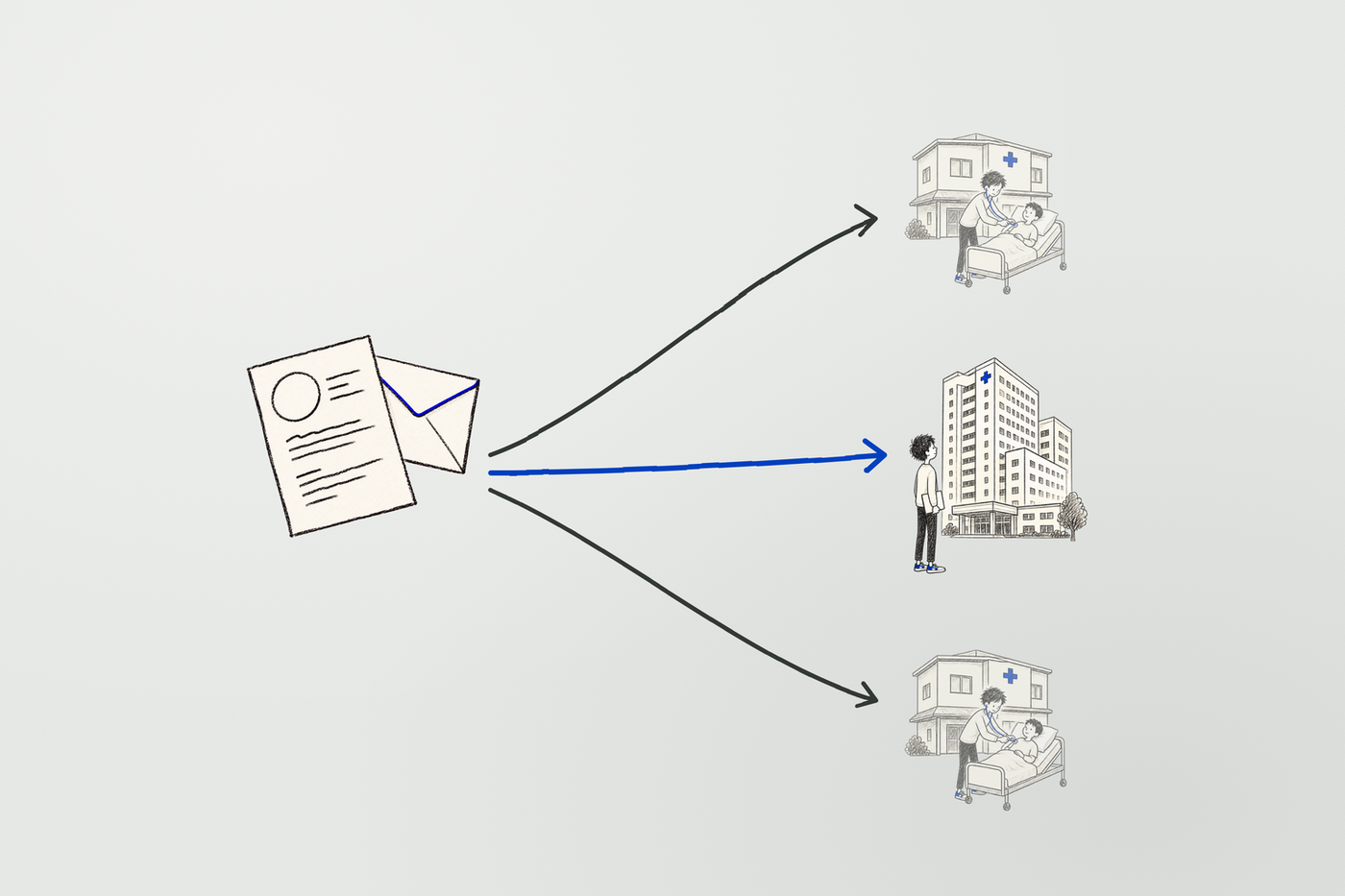
Two things make this hard for foreign doctors. Most of us have no German clinical experience yet, and most of us do not know how a German hospital expects to be addressed. I learned both the hard way.
My first job came quickly. I found an Internal Medicine position in March 2025 and moved to Germany at the end of April to a small hospital in Korbach. I would do that again. At a small hospital you do everything yourself, discharge letters, blood draws, ultrasounds, admissions. Your German improves fast because you have to talk to everyone, and you know the whole team by name within a month.
The second job was the hard one. At the end of February 2026 I started applying to Berlin. Application after application, and silence. No Absage, no reply, nothing. So in spring 2026 I rebuilt my CV and my Anschreiben from zero. My interview rate went from one in ten to eight in ten. I passed every interview I sat, and in the end I chose between five Berlin hospitals.
What changed was not my qualifications. Those were the same before and after. What changed was how I presented them, how fast I applied, and how wide. Three things I would tell anyone at this step:
- Do not apply only to Berlin and Munich with no German work experience. Those are the two most competitive cities in the country. Widen the search, and be ready to start somewhere smaller.
- Apply fast and in volume. Twenty good applications in an hour beat three perfect ones in a week. Hospitals fill positions quickly.
- If you have no clinical experience in Germany at all, a Hospitation, an unpaid observership of a few weeks, gives you a German reference and a first line of German experience on the CV.
Why I built Klaro
Step 7 is where I lost the most time, and it is the step nobody teaches. That is why I built Klaro. It builds your Lebenslauf and your Anschreiben the way a German hospital expects to read them, and it finds open positions from more than 150 German job platforms and hospital career pages, updated daily, so you can apply the same day a job appears instead of finding it three weeks later. Building your documents on Klaro is free.
My timeline, in one table
- End of 2023: chose Germany over the USMLE, fifth year, no diploma yet. Started German.
- August 2024: graduated in Cluj-Napoca, Romania.
- September 2024: passed the B2 exam.
- October 2024: passed telc C1 Medizin, first attempt.
- December 2024: diploma arrived.
- 17 January 2025: filed the Approbation documents in Schleswig-Holstein.
- 13 February 2025: Approbation granted.
- March 2025: found an Internal Medicine job. End of April 2025: moved to Germany, small hospital in Korbach.
- Spring 2026: rebuilt my application, interview rate one in ten to eight in ten, five Berlin offers.
About a year and a half from the decision to the first job, and most of that was German.
What to do this week
- If you are still in medical school: start German today, and write down the document list from the authority of one Bundesland you are considering.
- If you have your diploma: book the B2 exam, order the sworn translations, and check the current waiting times of two or three states before you choose one.
- If you have the Approbation: stop polishing one application and send twenty. Widen beyond the big cities. If nobody answers, the problem is the documents, not you.
The 60-second version of all this is on my Instagram, @ahmed.quteishat. The long version is here, so you can send it to the friend from medical school who is at the same step as you.
Ahmed Quteishat — Founder, Klaro
Ahmed built Klaro after watching how much of a doctor's move to Germany gets lost in paperwork rather than medicine.