German doctors do not need textbooks
You do not need German medical textbooks for the language exam. Practise patient interviews, written reports, and doctor-to-doctor case discussions instead.
Ahmed Quteishat
Assistenzarzt, Innere Medizin (Berlin) · Founder of Klaro

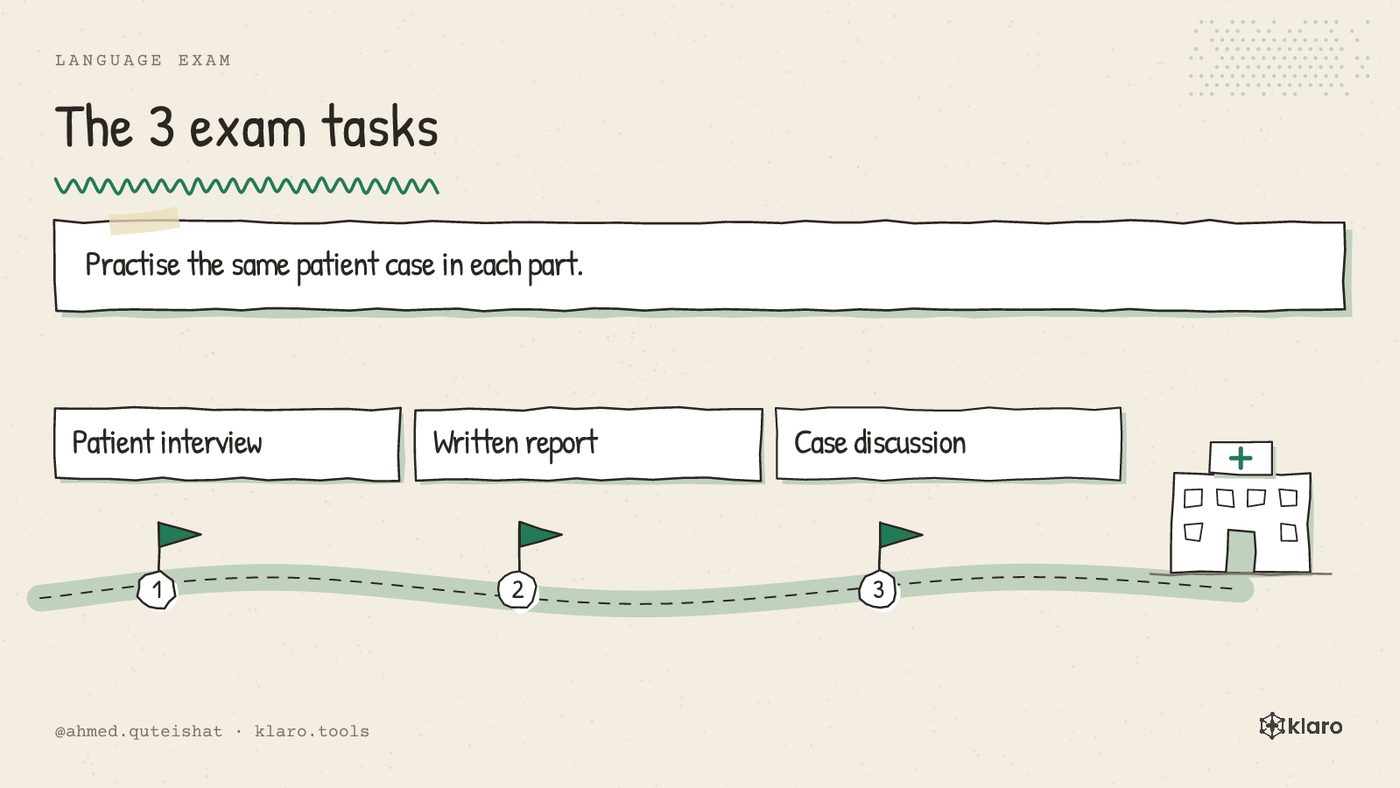
You do not need German medical textbooks before the language exam for doctors. You need to practise 3 tasks: speaking with a patient, writing a report, and discussing a case with another doctor.
A thick cardiology book will not help much at the examination table. The examiner wants clear German when you ask about chest pain, write an admission report, and hand over a patient.
What the exam actually tests
The language exam for doctors (Fachsprachprüfung) tests medical German, not medical knowledge. It is about level C1 and the state medical chamber runs it, with rules that vary by state.
The exam has 3 parts and lasts 60 minutes in Lower Saxony. You speak to a patient for about 20 minutes, write a report, then discuss the case with a doctor examiner.
You still need basic medical knowledge. If a patient says she has sudden weakness in one arm, you need sensible follow-up questions. But you do not need to revise an entire neurology textbook in German.
Buy one book, not five
Buy one German book only if it gives you spoken phrases and model reports. A book filled with long chapters about diseases is a poor use of your study time.
- Deutsch für Ärztinnen und Ärzte is useful for patient questions and ward language.
- Menschen im Beruf: Medizin helps with everyday medical vocabulary and short dialogues.
- A book called Fachsprachprüfung Medizin is useful when it includes role plays and sample reports.
Use the book with a notebook. Write phrases you will say aloud, such as questions about allergies, medication, pain, pregnancy, alcohol, and previous operations.
Practise the 3 exam tasks
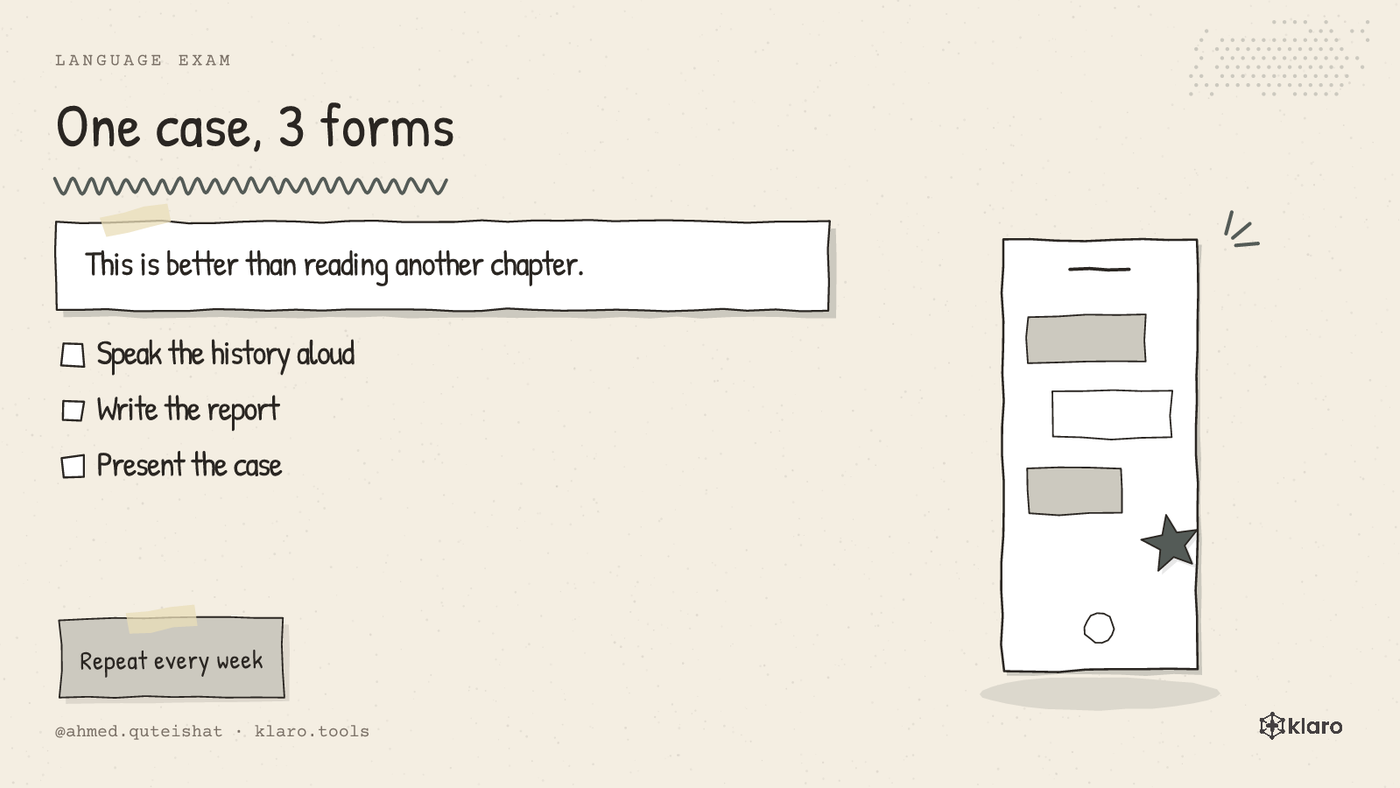
Patient conversations come first. Take one case, such as abdominal pain, and practise a full history aloud for 20 minutes.
Then write the report from your notes. Use headings like current complaint, previous illnesses, medication, allergies, examination, and next steps.
Last, present the same patient to a colleague. Start with the patient’s age, main complaint, important history, examination findings, and your suspected diagnosis.
Do not study like this
Do not spend evenings translating textbook pages word by word. You will learn rare terms while still freezing when a patient says, “I feel dizzy when I stand up.”
Do not memorise perfect sentences either. Patients interrupt, forget dates, and use everyday words. You need to ask the next question in simple German.
What to do this week
- Choose 1 book with dialogues, case discussions, and sample reports.
- Record a 20-minute history for 1 common case on your phone.
- Write 1 German report from that recording using clear headings.
- Practise handing the same case to a friend playing the doctor examiner.
German medical textbooks are optional. Daily practice with patient conversations, reports, and case discussions is the work that gets you ready for the exam.
Stand: 2026-10-20. This is a guide, not legal advice. Every German state has its own rules, and rules change. Check with your state's [medical chamber (Landesärztekammer)](https://www.bundesaerztekammer.de/aerztekammern) before you act.
Ahmed Quteishat — Assistenzarzt, Innere Medizin (Berlin) · Founder of Klaro
Ahmed built Klaro after watching how much of a doctor's move to Germany gets lost in paperwork rather than medicine.