Grammar mistakes in Germany language exams
A grammar mistake alone does not fail the German language exam. Errors that make symptoms, medicines or urgency unclear can fail you.
Ahmed Quteishat
Assistenzarzt, Innere Medizin (Berlin) · Founder of Klaro
A grammar mistake alone does not fail the German language exam for doctors. You fail when your words make a symptom, medicine, allergy or urgent action unclear.
The medical language exam for doctors (Fachsprachprüfung) checks how you speak with a patient and another doctor. It is about language, not medical knowledge.
What the exam looks like
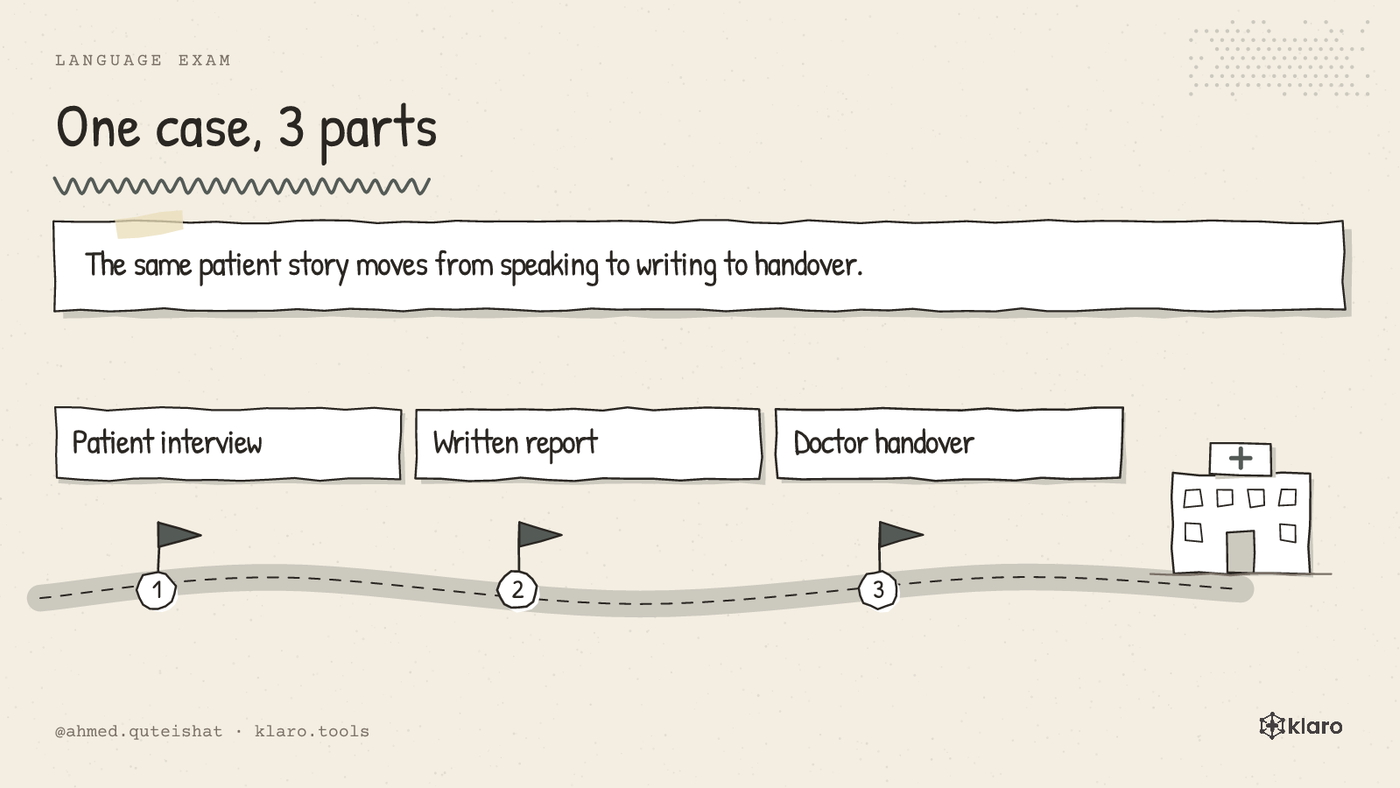
The exam has 3 parts and lasts 60 minutes in total. You speak with a patient, write a report, then hand the case to a doctor examiner.
Each part lasts about 20 minutes. The same patient story follows you through the room, the paper and the doctor handover.
Small mistakes are not the problem
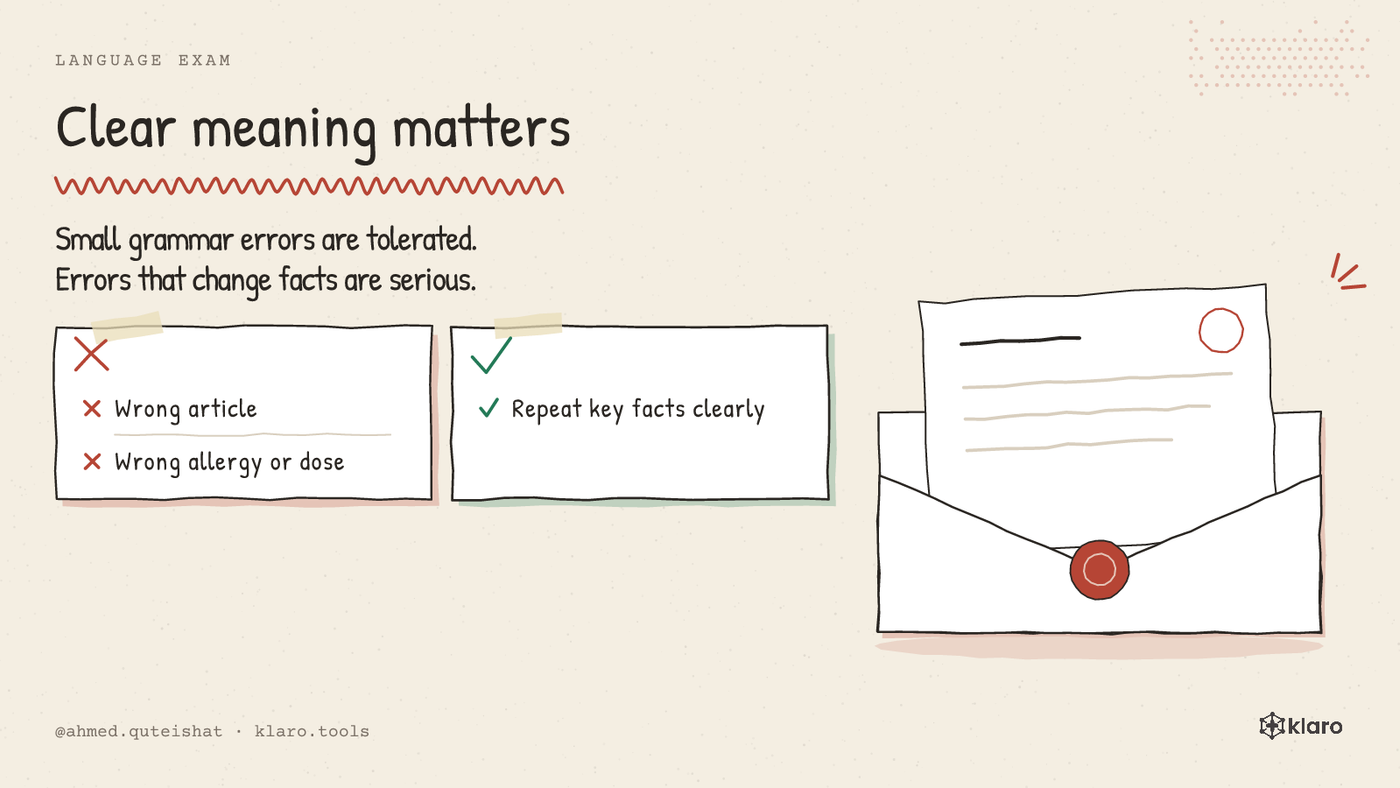
A wrong article is a small mistake. Saying “der Schmerz” instead of “die Schmerzen” does not hide what the patient feels.
A wrong word ending is also small when the sentence stays clear. The examiner can still understand where the pain is and when it started.
- A wrong article: “der Übelkeit” instead of “die Übelkeit”
- A wrong plural: “2 Tablette” instead of “2 Tabletten”
- A wrong sentence order that still names the symptom clearly
- A short pause while you look for a German word
Do not stop after every error to correct yourself. Continue the patient interview calmly, then correct one important word if it changes the meaning.
These mistakes can fail you
Unsafe errors change the meaning of the patient’s story. They make the doctor examiner unsure what happened or what must happen next.
- Mixing up “no allergy” with “an allergy”
- Saying the wrong medicine dose or wrong medicine name
- Missing “since yesterday” and writing “for years”
- Confusing left and right arm pain
- Failing to ask about chest pain, breathlessness or loss of consciousness
Picture a patient with chest pain in the exam room. If you write “no chest pain” after the patient clearly described it, your report changes the case.
The problem is not perfect grammar. The problem is that the senior doctor receives a false report and acts on it.
Use short safety sentences
Short sentences protect you when your German feels shaky. They also help the patient understand what you are asking.
- Ask one clear question: “Where exactly is the pain?”
- Repeat the answer: “The pain started this morning, correct?”
- Say the important fact again during handover.
- Write the same fact in your report.
Do not use long sentences to sound advanced. A clear question about allergies is better than a long sentence with 3 grammar mistakes.
What to do before your exam
Train the same case in 3 places: spoken history, written report and doctor handover. Use a timer for 20 minutes each time.
- Make an allergy question card and say it every day.
- Record a 2-minute handover about chest pain.
- Underline every dose, time and body side in your report.
- Ask your study partner to stop you only for meaning-changing errors.
Stand: 2026-10-18. This is a guide, not legal advice. Every German state has its own rules, and rules change. Check with your state's [medical chamber (Landesärztekammer)](https://www.bundesaerztekammer.de/aerztekammern) before you act.
Ahmed Quteishat — Assistenzarzt, Innere Medizin (Berlin) · Founder of Klaro
Ahmed built Klaro after watching how much of a doctor's move to Germany gets lost in paperwork rather than medicine.