Which Medical Specialties Are Realistic for IMG Doctors in Germany?
IMG doctors in Germany should target surgery and pathology first. Dermatology, radiology and ophthalmology usually go to doctors with German ward experience.
Ahmed Quteishat
Founder, Klaro
IMG doctors in Germany should apply first to surgery and pathology, not dermatology, radiology, or ophthalmology. A new Approbation holder with no German hospital job has the best chance where a department needs doctors for ward rounds, admissions, operating theatre cover, and night duty. Dermatology, radiology, and ophthalmology departments receive applications from doctors who already worked in German clinics.
This is a ranking for your first junior doctor job, not a judgment about which specialty is better. You can move toward dermatology or radiology later. First, get a contract, learn German ward work, and collect signed entries in your training record.
The practical ranking for a first job
For an IMG doctor, the realistic order is usually: broad surgical specialties first, pathology next, then selected internal medicine jobs, then radiology and ophthalmology, with dermatology at the hardest end. Oral and maxillofacial surgery needs its own category because a medical degree alone does not open the door.
- Most realistic: General surgery (Allgemeinchirurgie), orthopaedics and trauma surgery (Orthopädie und Unfallchirurgie), visceral surgery, vascular surgery, and smaller hospitals outside major cities.
- Realistic for the right applicant: Pathology, anaesthesiology, psychiatry, geriatrics, rehabilitation medicine, and internal medicine departments with a clear staffing need.
- Hard as a first German job: Radiology and ophthalmology. Departments value German reports, German patient conversations, and previous work in the specialty.
- Hardest: Dermatology. The small number of junior doctor posts attracts applicants with German internships, research, doctoral work, or previous German hospital contracts.
- Separate barrier: Oral and maxillofacial surgery (Mund-, Kiefer- und Gesichtschirurgie, MKG). You need both a medical licence and a dental licence to enter the German training programme.
This is what people mean when they talk about Facharzt Konkurrenz, competition for specialist training posts. The competition is not one national queue. It happens in each department, when a chief opens one vacancy and reads 30 CVs. A clinic in rural Saxony-Anhalt can make a different decision from a university hospital in Munich.
Why surgery gives IMG doctors more first chances
Surgical departments need doctors on the ward and in the emergency room every day. The first year includes writing discharge letters, taking blood, examining abdominal pain at 2am, arranging CT scans, and preparing patients for operations. A department can teach these jobs to a doctor with a new Approbation if that doctor has solid German and is ready for night and weekend duty.
General surgery is the strongest first target because its skills travel. You learn postoperative ward rounds, wound care, drains, anticoagulation, emergency admissions, and operating theatre routines. Those entries in your Logbuch, the official training record, help later if you apply to visceral surgery, vascular surgery, trauma surgery, or plastic surgery.
The exception is a famous surgical department in Berlin, Hamburg, Munich, or Cologne. A university clinic there can choose between applicants who already completed a German surgical rotation. Apply anyway if the post fits you, but do not send only 5 applications to city-centre university hospitals and call the market closed.
Why pathology is more realistic than people expect
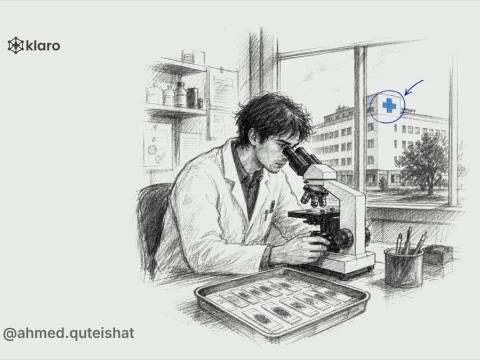
Pathology is realistic because the daily job is different from a dermatology clinic or eye clinic. You work with biopsy specimens, resection specimens, frozen sections during operations, microscope slides, and pathology reports. The department still needs clear German because your written diagnosis goes to surgeons and oncologists.
A pathology application works when your CV shows you understand the job. Mention histology, cytology, tumour boards, autopsy work where relevant, and laboratory experience. Do not write that you want pathology because there is less patient contact. A chief wants a junior doctor who will learn to describe tissue accurately and discuss a specimen with the surgical team.
Why dermatology, radiology, and ophthalmology reject more first applications
Dermatology is hard because the departments are small and the work is attractive to many German graduates. A dermatology chief can select a doctor who already knows German outpatient consultations, skin examination terms, biopsy workflows, and phototherapy. A new licence holder from abroad is competing with that CV from the first email.
Radiology is also competitive, although the job market is not identical in every Bundesland. A radiology department needs junior doctors to cover CT, MRI, X-ray reports, emergency calls, and clinical discussions with other departments. German radiology experience, a German elective, or strong image interpretation work gives an applicant a clearer advantage than a generic motivation letter.
Ophthalmology has the same first-job problem. Many departments are small, and the junior doctor learns slit-lamp examinations, retinal checks, cataract clinic routines, and eye emergency work under close supervision. A hospital often chooses someone it has already seen during a Hospitation or elective.
MKG is realistic only after you clear the licence barrier
MKG is not simply another surgical application. German specialist rules require both Approbation as a doctor and permission to practise dentistry before you start the specialty training. A strong surgical CV does not replace the dental qualification.
If you hold both degrees, MKG departments can be a serious target because you bring an uncommon combination. If you hold medicine only, send your applications to general surgery, trauma surgery, ENT, or plastic surgery instead. Those departments can hire you with a medical Approbation.
How to apply without wasting 6 months
Build 2 application lists. Put 30 to 50 surgical and pathology departments on the first list, including district hospitals in Brandenburg, Lower Saxony, Saxony-Anhalt, Thuringia, and rural Bavaria. Put dermatology, radiology, and ophthalmology on the second list, but treat them as selective applications rather than your only route into Germany.
Change the first paragraph of every cover letter. For general surgery, name emergency admissions, wound care, postoperative patients, and night duty. For pathology, name histology and tumour boards. A chief can see within 20 seconds whether you understand the vacant job.
Before you sign, ask about the Weiterbildungsbefugnis, the training licence held by a named senior doctor. The licence states how much of the specialty training that department can certify. A hospital may offer a surgical contract but certify only part of the required training period, which means you will later need another hospital.
What to do on Monday
- Make a first list of 30 surgical and pathology departments outside Berlin, Munich, Hamburg, and Cologne.
- Send each chief a cover letter that names the ward tasks in that specialty, such as postoperative rounds or histology reports.
- Ask each department in writing: “How much of the specialty training can your training licence certify for junior doctors?”
- Keep dermatology, radiology, and ophthalmology applications active, but do not wait unemployed for one of those departments to reply.
- Use Klaro’s hospital search to find departments, then apply where your first German job is realistic.
Stand: 2026-09-21. This article is orientation, not legal advice. Rules differ by Bundesland and change — always confirm with your [Landesärztekammer](https://www.bundesaerztekammer.de/aerztekammern) before acting.
Ahmed Quteishat — Founder, Klaro
Ahmed built Klaro after watching how much of a doctor's move to Germany gets lost in paperwork rather than medicine.