Fachsprachprüfung Preparation in Germany: An 8-Week Plan
Prepare for the Fachsprachprüfung in 8 weeks by training patient conversations, medical letters and doctor handovers every day.
Ahmed Quteishat
Founder, Klaro
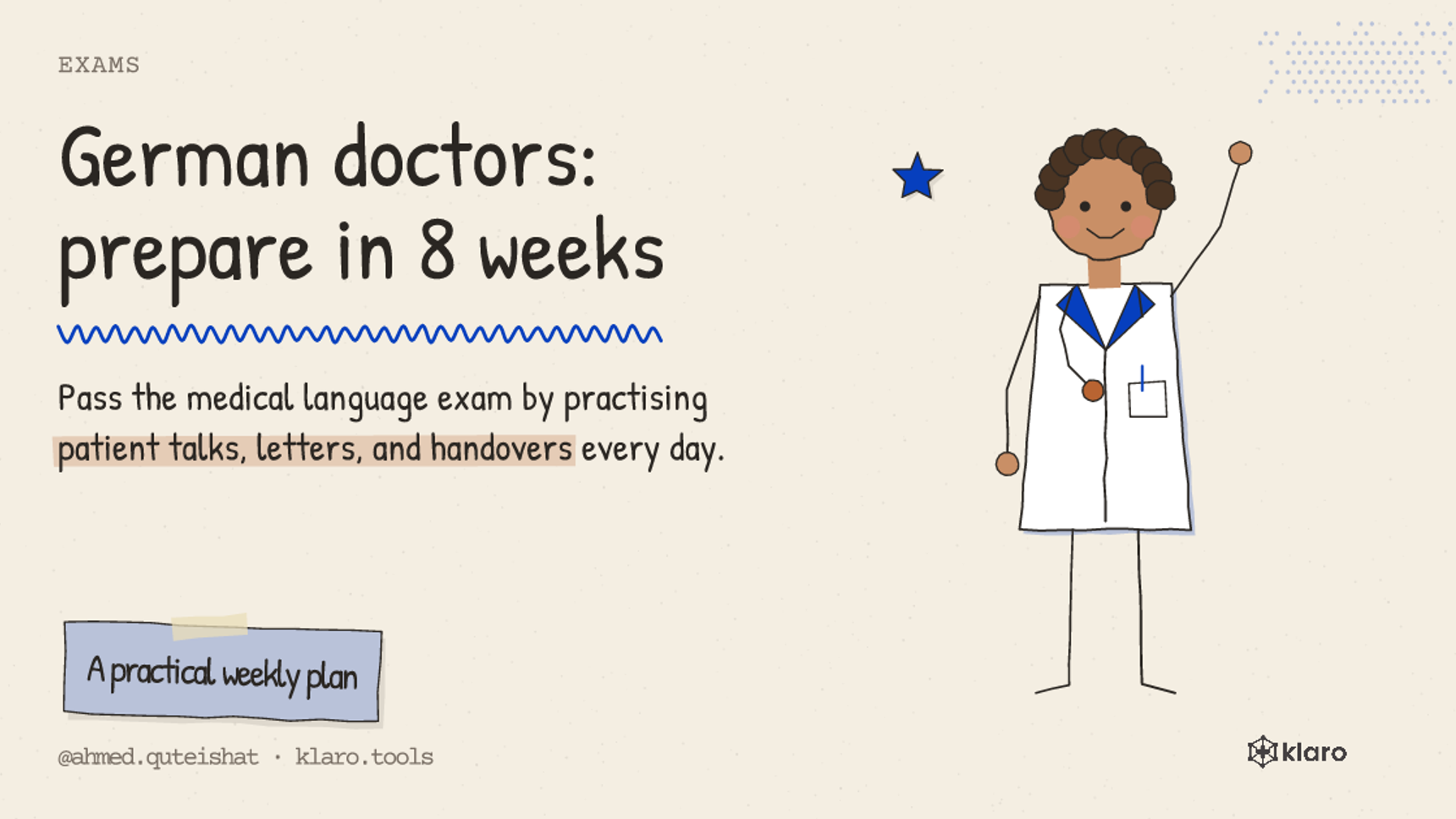
You can prepare for the Fachsprachprüfung in 8 weeks if you practise the 3 exam conversations every day. Do not spend those 8 weeks collecting vocabulary lists. The examiners want to hear a doctor who can take a history from a patient, write a clear medical letter, and hand over a case to a senior doctor in German.
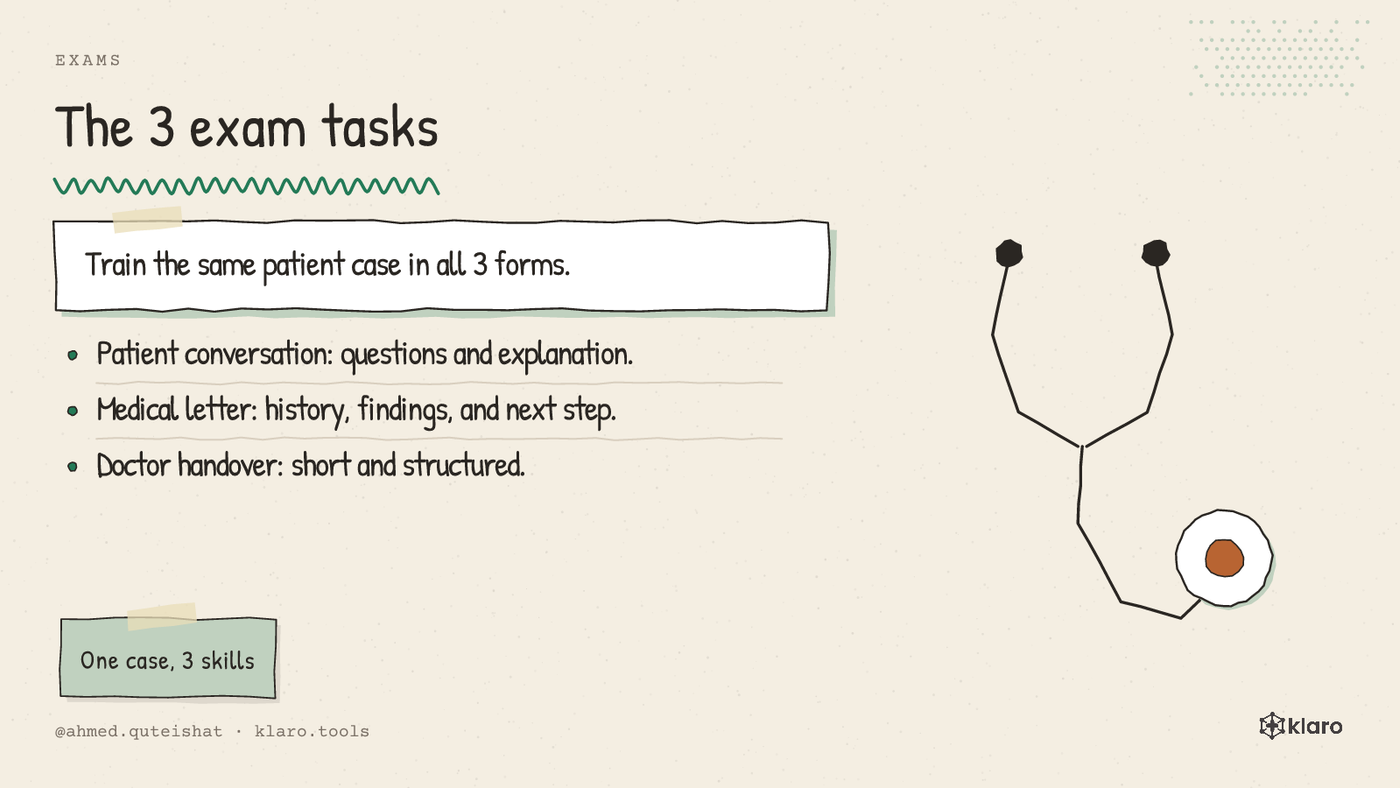
The Fachsprachprüfung is the medical language exam required by most German states before you receive Approbation (full licence). Your state medical chamber, called the Landesärztekammer, runs the exam or appoints the exam office. The format differs by state, but the usual exam has a patient conversation, a written case note or letter, and a doctor-to-doctor conversation.
What examiners actually listen for
Examiners listen for clear medical German in a real consultation. They listen to whether you introduce yourself, ask focused questions, explain the next step, and check whether the patient understood you. A patient who looks confused after your explanation is a problem, even if you used difficult vocabulary correctly.
In the written part, they look for a usable document. That means a readable structure with the patient’s complaint, history, medication, allergies, examination findings, suspected diagnosis, and next steps. A letter full of perfect grammar but missing the medication list does not help the doctor receiving it.
In the handover, they listen for order. A senior doctor needs the patient’s name, age, main complaint, relevant history, findings, and your request. You do not need to perform like a university lecturer. You need to speak like the junior doctor calling the senior doctor from the ward at 6pm.
Weeks 1 and 2: build your exam language
Start with the 3 parts of the exam, not with random medical words. Take 10 common cases: chest pain, abdominal pain, headache, shortness of breath, fever, back pain, dizziness, urinary symptoms, leg swelling, and vomiting. For each case, make one page with questions, possible answers, examination phrases, and a short handover.
Speak aloud every day. Sit with a phone, open a timer, and record a history for one case. Listen again and mark the places where you stop, switch to English, or use the same word 5 times. Then record the same case again. This is more useful than reading 40 pages of notes silently.
Weeks 3 and 4: make patient conversations automatic
Now practise one structured patient conversation each day. Use the same opening every time: greet the patient, confirm their name and date of birth, ask why they came, then move through the symptoms. A fixed opening saves your energy for the patient’s answers.
- Ask about the main symptom: location, start, severity, and change.
- Ask about previous illnesses, operations, medication, and allergies.
- Ask focused questions for the case, such as breathlessness with chest pain.
- Explain the examination or blood test in short German sentences.
- Close by telling the patient what happens next.
Find one speaking partner who plays the patient. It can be a doctor, a language teacher, or another candidate. Give that person a case card with answers. If your partner gives only short answers, ask follow-up questions. The examiner will not rescue a weak history by giving you every detail.
Weeks 5 and 6: write letters and hand over cases
During weeks 5 and 6, connect the 3 tasks. After every spoken history, write a short medical letter from your notes. Then stand up and hand the case over aloud. You are training the exact change the exam demands: patient language first, medical written German next, then professional speech with a colleague.
Use one repeatable structure for every letter. Write the patient’s details, reason for presentation, history, medication and allergies, findings, working diagnosis, and proposed action. Ask a German-speaking doctor or teacher to correct 5 letters carefully. Keep a separate page called “my repeated mistakes” for word order, articles, prepositions, and medical terms.
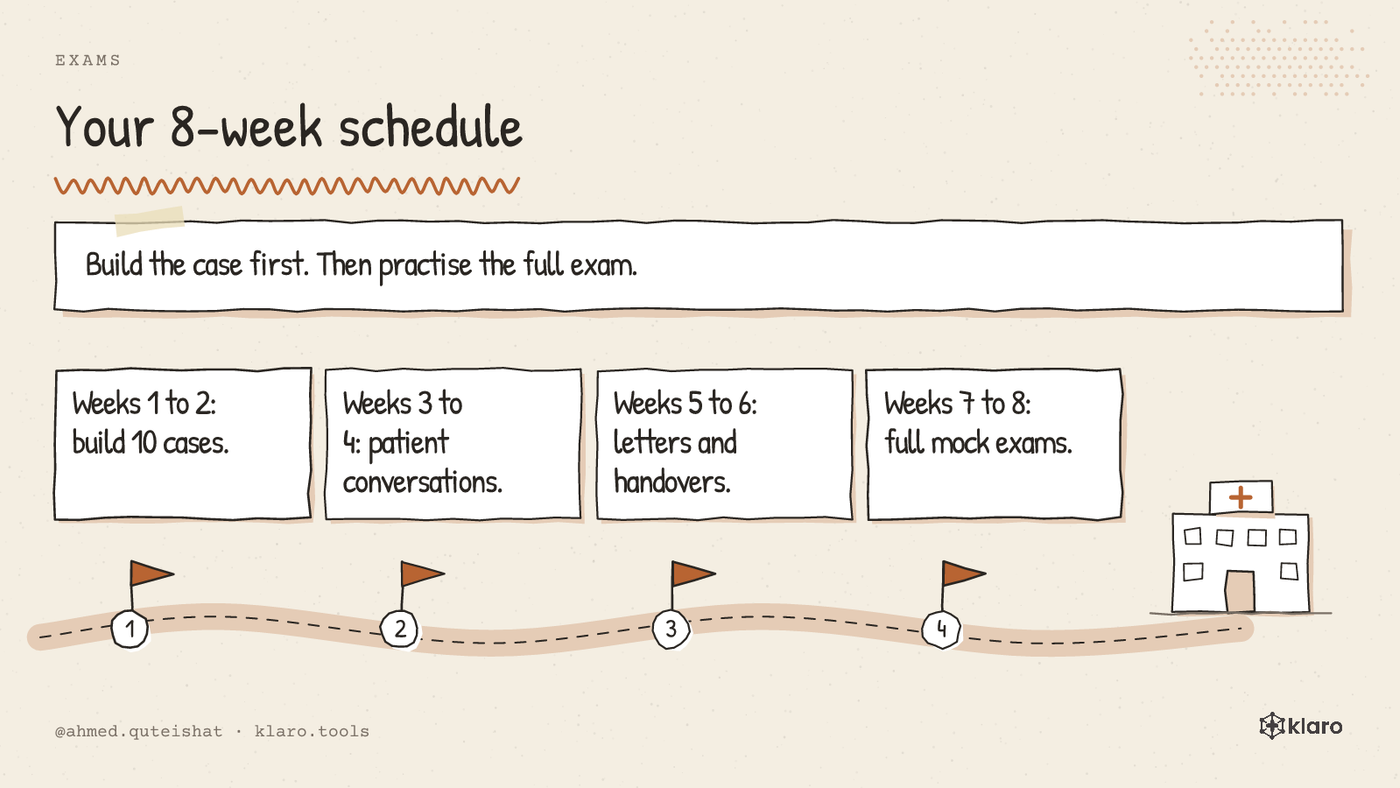
Weeks 7 and 8: sit full mock exams
In the last 2 weeks, stop practising parts in isolation. Sit a full mock exam 3 times each week. One person plays the patient. Another person listens as the examiner or senior doctor. Use a new case each time, because memorised answers fail when the patient has different symptoms.
- Take the history without reading a script.
- Write the case note from the information you collected.
- Give the handover without reading the whole letter aloud.
- Write down 3 errors after the mock exam.
- Repeat the same case once with corrected German.
Keep your final week calm and practical. Review your opening phrases, symptom questions, medication questions, and common examination instructions. Sleep before your mock exam days. On exam day, speak slower than you think you need to. Clear sentences are easier for the patient, the examiner, and you.
What to do this week
- Download the Fachsprachprüfung information sheet from your state medical chamber.
- Choose 10 common emergency and internal medicine cases for your case folder.
- Record one patient history on your phone every day for 8 weeks.
- Write 5 corrected medical letters before you book the exam.
- Book 3 full mock exams with a speaking partner in your final 2 weeks.
Stand: 2026-09-26. This article is orientation, not legal advice. Rules differ by Bundesland and change, so always confirm with your [Landesärztekammer](https://www.bundesaerztekammer.de/aerztekammern) before acting.
Ahmed Quteishat — Founder, Klaro
Ahmed built Klaro after watching how much of a doctor's move to Germany gets lost in paperwork rather than medicine.