Which German hospital size builds a doctor's skills faster
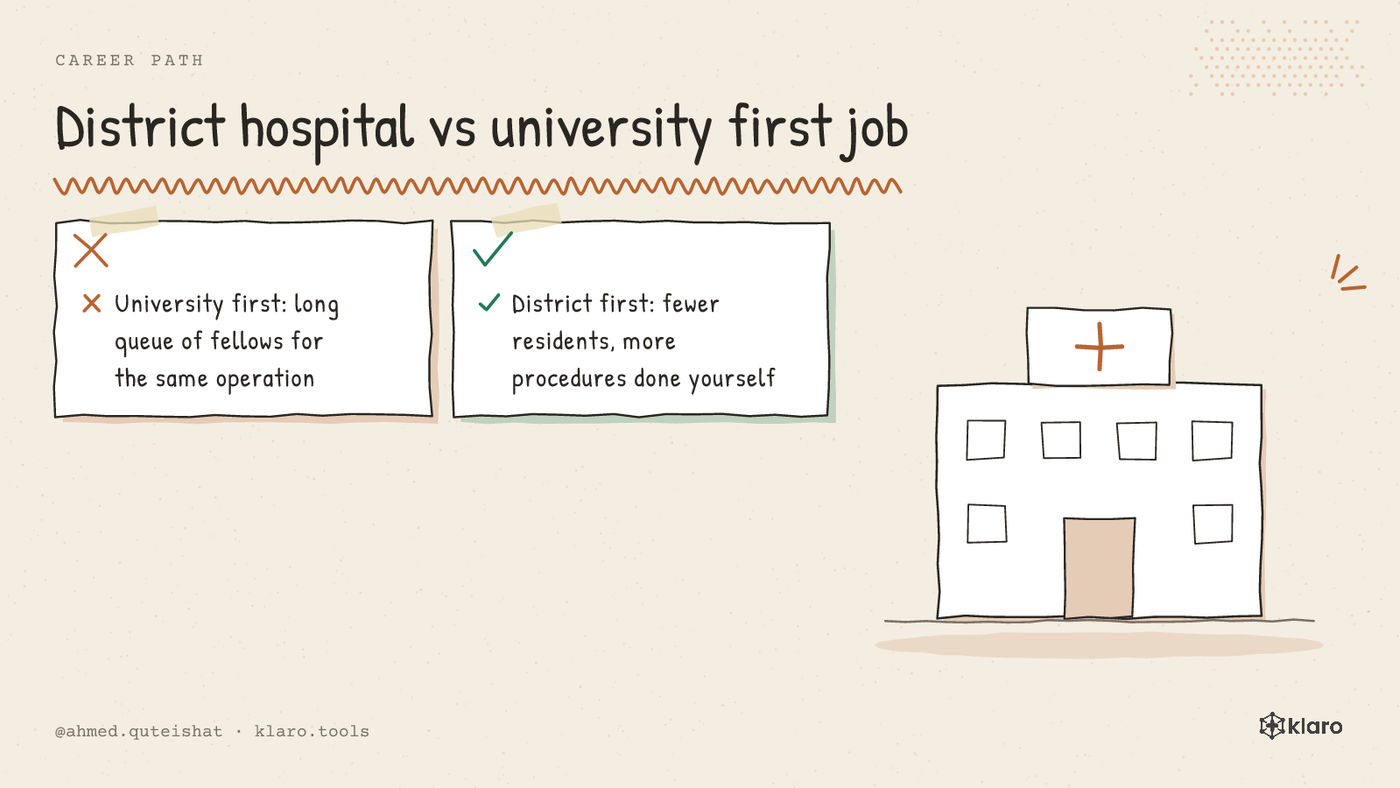
District hospitals in Germany give foreign doctors more hands-on procedures early. University hospitals give rare cases, but a longer queue.
Ahmed Quteishat
Assistenzarzt, Innere Medizin (Berlin) · Founder of Klaro
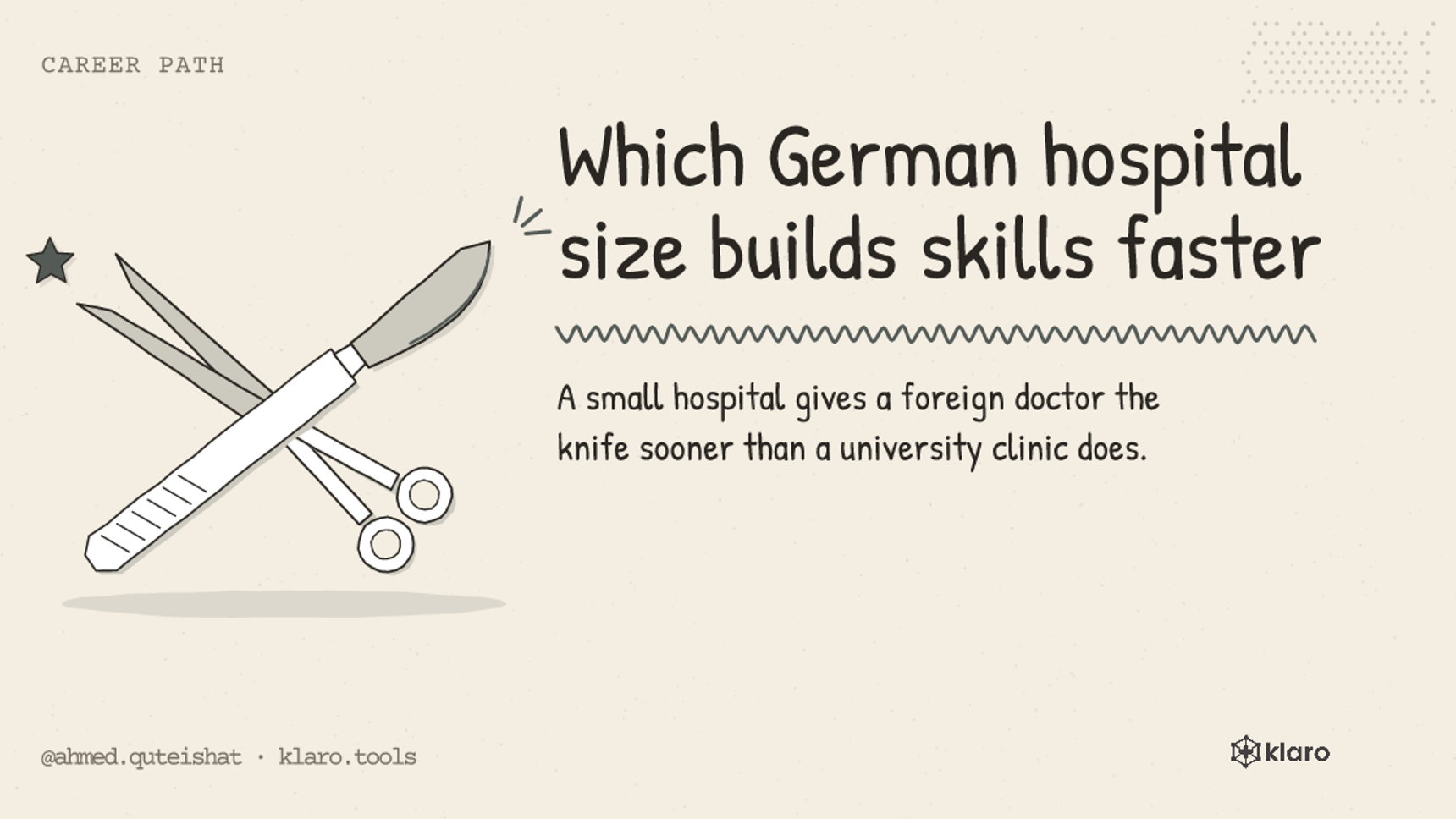
If you want to do procedures, not watch them, start at a small hospital (Kreiskrankenhaus), not a university hospital (Uniklinik). A university hospital has more residents and fellows chasing the same gallbladder and appendix cases. A small hospital has fewer hands and more work than it can cover, so you get the knife sooner.
Why case numbers differ by hospital size
A university hospital department often has 30 to 50 residents, fellows and senior doctors in one specialty. Every appendectomy, every hernia repair has a queue of people ahead of a new foreign doctor.
A district hospital with 150 to 300 beds runs general surgery with a much smaller team. The same operations happen, but there are fewer residents to split them with. You scrub in, and often you do the case, not just assist.
What a university hospital gives you instead
University hospitals carry the rare and complex cases: transplants, cardiac surgery, neurosurgery, complicated oncology. If your target specialty only exists in a university hospital, you have to train there eventually.
But in your first 1 to 2 years, you are not doing transplants. You are doing wound care, small operations, ward admissions and night duty (Bereitschaftsdienst). Those basics build faster where fewer people compete for them.
When should you move to a university hospital
Once you have the common operations in your training record (Logbuch): appendix, hernia, gallbladder, basic trauma. That is usually after 2 to 3 years at a district hospital.
At that point a university hospital adds the rare cases on top of a base you already have. Without that base, you are one of 40 residents learning to suture for the first time next to a transplant surgeon.
What to ask before you take a job
- Ask the department: how many procedures will a first-year do myself, not just assist?
- Ask how many residents and fellows are ahead of you for the same operation list.
- Ask who signs your training record (Logbuch) and how often it gets reviewed.
- Count the beds and the team size before you compare one offer to another.
Stand: 2026-10-31. This is a guide, not legal advice. Every German state has its own rules, and rules change. Check with your state's medical chamber (Landesärztekammer) before you act.
Ahmed Quteishat — Assistenzarzt, Innere Medizin (Berlin) · Founder of Klaro
Ahmed built Klaro after watching how much of a doctor's move to Germany gets lost in paperwork rather than medicine.