The 5 Easiest Specialties to Get in Germany as a Foreign Doctor
Internal medicine, geriatrics, psychiatry, anaesthesia and general surgery have the widest-open doors for foreign doctors in Germany — plus the honest catch that comes with each one.
Ahmed Quteishat
Founder, Klaro
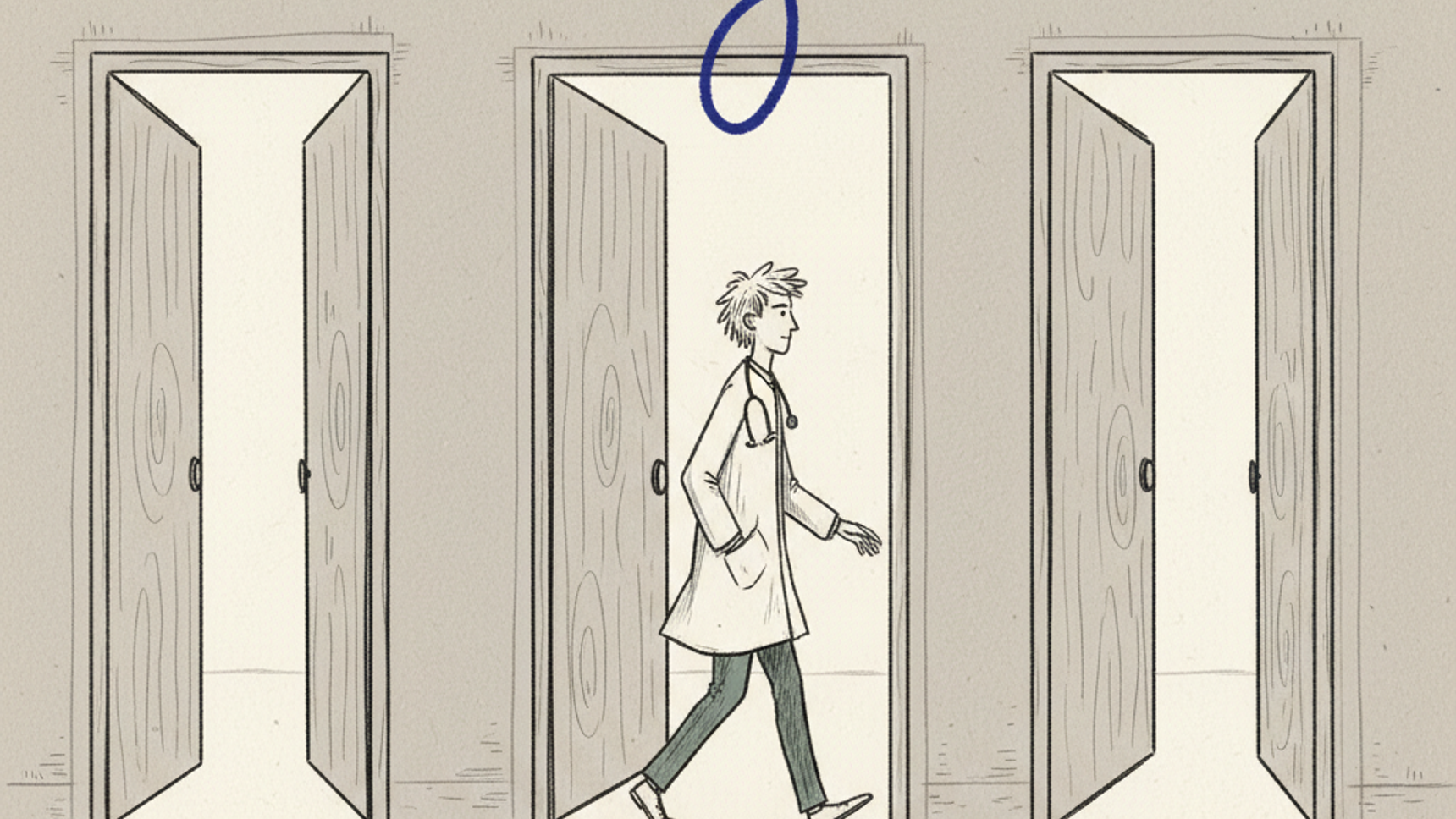
"Easiest" here means one specific thing: the number of open training positions compared with the number of people applying for them. It does not mean the work is easy — and for at least two of the five below, the work is genuinely hard.
But if what you need is the first Assistenzarzt post that actually gets you inside the German system — the one where your application is read rather than filtered — these are the five fields where the doors are widest. Counting down from five.
5. Allgemeinchirurgie — the field German doctors are leaving
General surgery has long hours, a heavy Dienst load, and a working culture a lot of German graduates now actively avoid. The result is simple: positions stay open.
That is an opportunity and a warning in the same sentence. They will take you if you can work hard, and they will expect exactly that. Go in with your eyes open about the hours, not just about the acceptance rate.
4. Anästhesie — every single operation needs one
Anaesthesia has structural demand that never softens. Every operation in the hospital requires an anaesthetist, so the number of posts scales with the entire surgical output of the country.
There is a second reason it suits internationally trained doctors specifically. In the first year the work is disproportionately hands and protocol rather than long, nuanced conversations with patients and families. If your German is still building, that first year is measurably kinder than a ward job.
3. Psychiatrie — easy to get, hard to do
There is a shortage of psychiatrists in most German cities. Send a reasonable application and you can expect a fast reply — sometimes uncomfortably fast.
Be honest with yourself before you take it. Psychiatry is talking, all day: history-taking that turns on nuance, idiom, and the things patients only half say. It is the specialty where weak German costs you most, and where no one else can quietly cover for you.
Easy to get into. Not easy to do with weak German.
2. Geriatrie — the demographics are on your side
Germany's population is ageing and geriatric departments are growing accordingly. Meanwhile geriatrics is not the field most German students dream about, so applicant pressure stays low while demand rises.
There is a practical bonus that matters more than it sounds: many geriatric teams are already substantially international. A department that has trained foreign doctors before knows what your paperwork looks like, knows where the language will be hard, and knows to be patient in the first months.
1. Innere Medizin — the biggest door in German medicine
Internal medicine is the largest field in the country. Every hospital has a department, from the small house in a village to the Uniklinik — which means it has, by a wide margin, the most positions.
It also has constant turnover, because internal medicine is where people start before moving into cardiology, gastroenterology, nephrology and the rest. Places open again and again.
This is where most internationally trained doctors in Germany begin, and there is nothing second-rate about it. It is a real training ground, and it keeps every subspecialty door open behind it.
One more, if you would rather skip the hospital entirely
If your goal is a Praxis rather than a hospital career, Allgemeinmedizin — general practice — is easier to enter than anything on this list. The shortage of GPs outside the cities is severe enough that practices and regional programmes actively recruit, and much of the Weiterbildung can be built from hospital rotations you would be doing anyway.
A word of caution about "easy"
An open door is a good reason to walk through it. It is not, on its own, a good reason to stay for five years.
- Pick for where you want to be in five years, not only for what accepts you in three months.
- Check whether the department's Weiterbildungsermächtigung covers the full Facharzt title or only part of it — a partial authorisation means moving hospitals mid-training.
- Ask what the first six months actually look like in concrete terms, not "you will be well integrated into the team".
- If the plan is to switch specialties later, decide that now and choose a first post that builds toward it.
Where this fits
The honest summary of this list: these five will get you in. Whether they are where you want to stay is a separate question, and worth answering deliberately rather than by drift.
The mirror image of this article is the five hardest specialties to get in Germany — worth reading before you commit to fighting for one. And if hours matter more to you than speed of entry, the five specialties with the best work–life balance explains why those two lists keep overlapping. Klaro itself is paused for a rebuild at the moment — the guides stay free to read with no account, and you can leave your email on the homepage to hear when the job search reopens.
Ahmed Quteishat — Founder, Klaro
Ahmed built Klaro after watching how much of a doctor's move to Germany gets lost in paperwork rather than medicine.