5 Specialties in Germany With the Best Work–Life Balance
Radiology, dermatology, ophthalmology, occupational medicine and psychiatry offer the best work–life balance in German medicine — and four of the five are hard to get into for that exact reason.
Ahmed Quteishat
Founder, Klaro
Work–life balance in German medicine is decided far less by which hospital you join than by which specialty you choose. Two doctors in the same building, on the same Tarif and the same contracted hours, can have completely different lives depending on what is written after "Facharzt für".
What separates them is emergencies: whether the specialty generates them at night, and whether it needs you physically present when it does. These are the five where the answer is mostly no. Counting down from five.
5. Psychiatrie — you still do Dienst, but you sleep
Psychiatry does not remove night duty. It changes what night duty is. No resuscitation at three in the morning, no emergency laparotomy, no call to theatre.
You are on for admissions, crises and assessments — real work, but work that usually lets you sleep through a good part of the night. Later, your own Praxis puts the hours genuinely under your control.
4. Arbeitsmedizin — the one almost nobody has heard of
Occupational medicine barely registers with medical students, which is exactly why it earns its place here twice over: once for the hours, once for the lack of competition.
You do not work in a hospital at all. You assess the health of employees inside companies — screenings, workplace risk, fitness for duty, return-to-work after illness. No nights and no weekends, structurally, rather than as a lucky rota.
And because so few people go looking for it, there is genuine room in it — which is a rare thing to be able to say about anything on a work–life-balance list.
3. Augenheilkunde — your patients go home
Ophthalmology is overwhelmingly outpatient work. Patients arrive, are examined, and leave. Very few stay overnight, and true ophthalmic emergencies are rare next to almost any other field.
Fair warning: this one also appears on the hardest-to-enter list, and for the reasons set out there — most eye medicine happens in a Praxis, hospital training slots are scarce, and the ones that exist often go to a PJ student the department already knows.
2. Dermatologie — almost nothing is an emergency
Dermatology is the cleanest example of the pattern. Almost no true emergencies, almost no night duty, and after the Facharzt the option of aesthetic work in your own practice with earnings to match.
Which is precisely why it is one of the hardest specialties in the country to get into. The lifestyle is not a secret, least of all from German graduates.
1. Radiologie — and then Teleradiologie changed the maths
Radiology already had the structure: no ward, no ward round, no families at the bedside, no running. You sit, you read images, you dictate the report.
What pushed it to number one is Teleradiologie. A growing number of hospitals now have scans read remotely, which means a radiologist can genuinely cover a Dienst without being in the building at all.
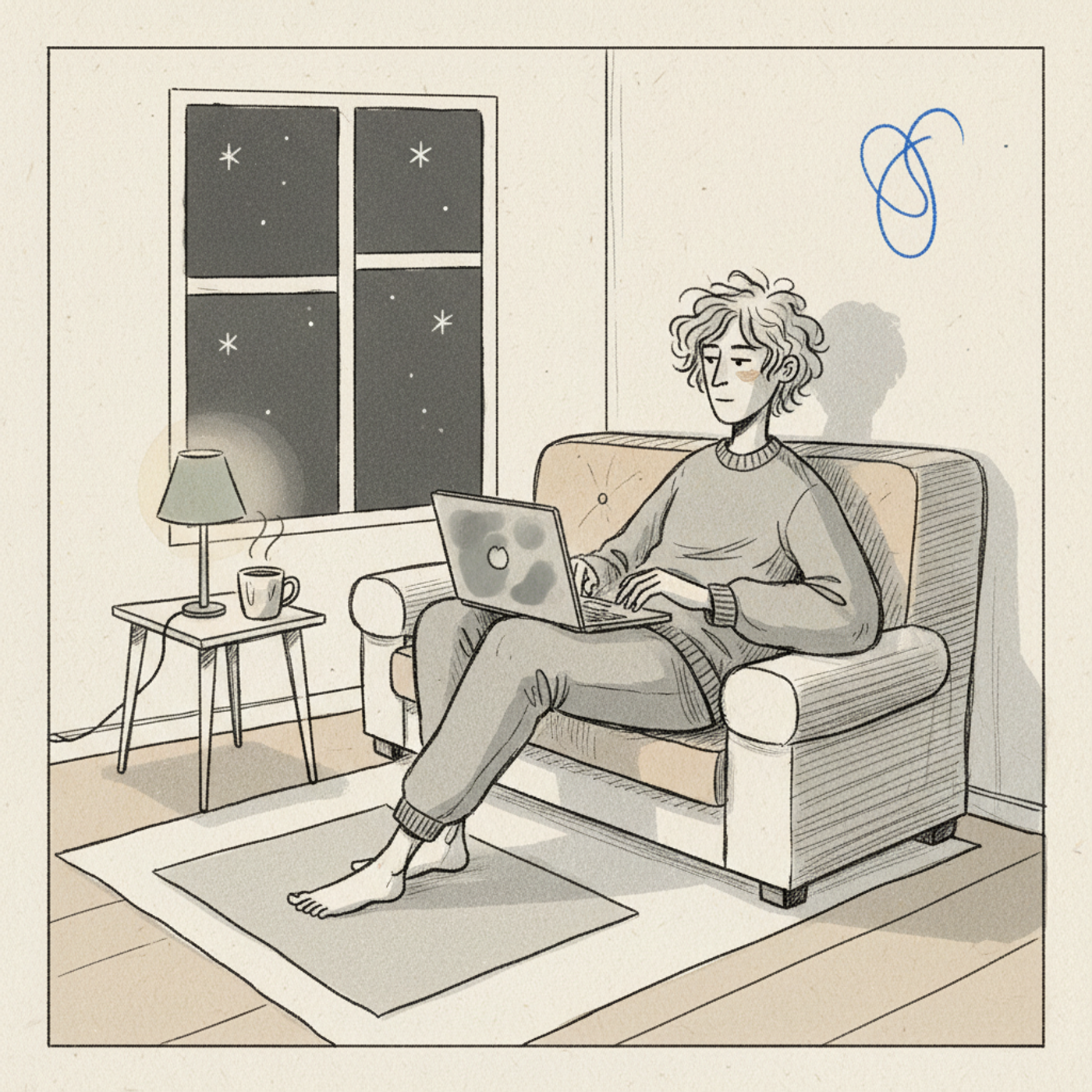
A doctor on call, from the sofa. That is what number one looks like.
The trade is the one from the hard list: the entire job is dictated German, which is exactly why these departments filter so hard on language.
The pattern nobody says out loud
Put the two lists side by side and it becomes obvious. Radiologie, Dermatologie and Augenheilkunde appear on both — best life, hardest to enter. That is not a coincidence. It is one fact seen from two directions: German graduates can read a rota too, and they choose accordingly.
So the real question is not which specialty has the best life. It is which trade you are willing to make.
- Go for the lifestyle field and accept a longer route in — stronger German, hospitations, probably a smaller hospital, probably a detour through another specialty first.
- Take an open door now, get inside the system, and buy yourself the option to move later with a German CV instead of a foreign one.
- Or find the mismatch. Arbeitsmedizin is the one field on this list where the hours are excellent and the queue is genuinely short.
Before you decide
One caution worth stating plainly: a specialty with quiet nights is not the same as a specialty you will enjoy for thirty years. Hours are the easiest thing to compare and rarely the thing people leave over.
If you want the other two parts of this series: the five hardest specialties to get in Germany explains why the lifestyle fields are so tightly held, and the five easiest covers where the doors are actually open right now. Klaro itself is paused for a rebuild at the moment — the guides stay free to read with no account, and you can leave your email on the homepage to hear when the job search reopens.
Ahmed Quteishat — Founder, Klaro
Ahmed built Klaro after watching how much of a doctor's move to Germany gets lost in paperwork rather than medicine.