German doctors should look beyond wards
Foreign doctors should apply to laboratory medicine and transfusion medicine in Germany, not only ward specialties.
Ahmed Quteishat
Founder, Klaro
Foreign doctors should add laboratory medicine and transfusion medicine to their Germany job search. These are full specialist careers, not jobs for doctors who failed to get a ward post.
Both fields sit behind work every hospital needs. A blood sample, a crossmatch before surgery, and a sepsis result at night all pass through these departments.
Two specialist jobs to know
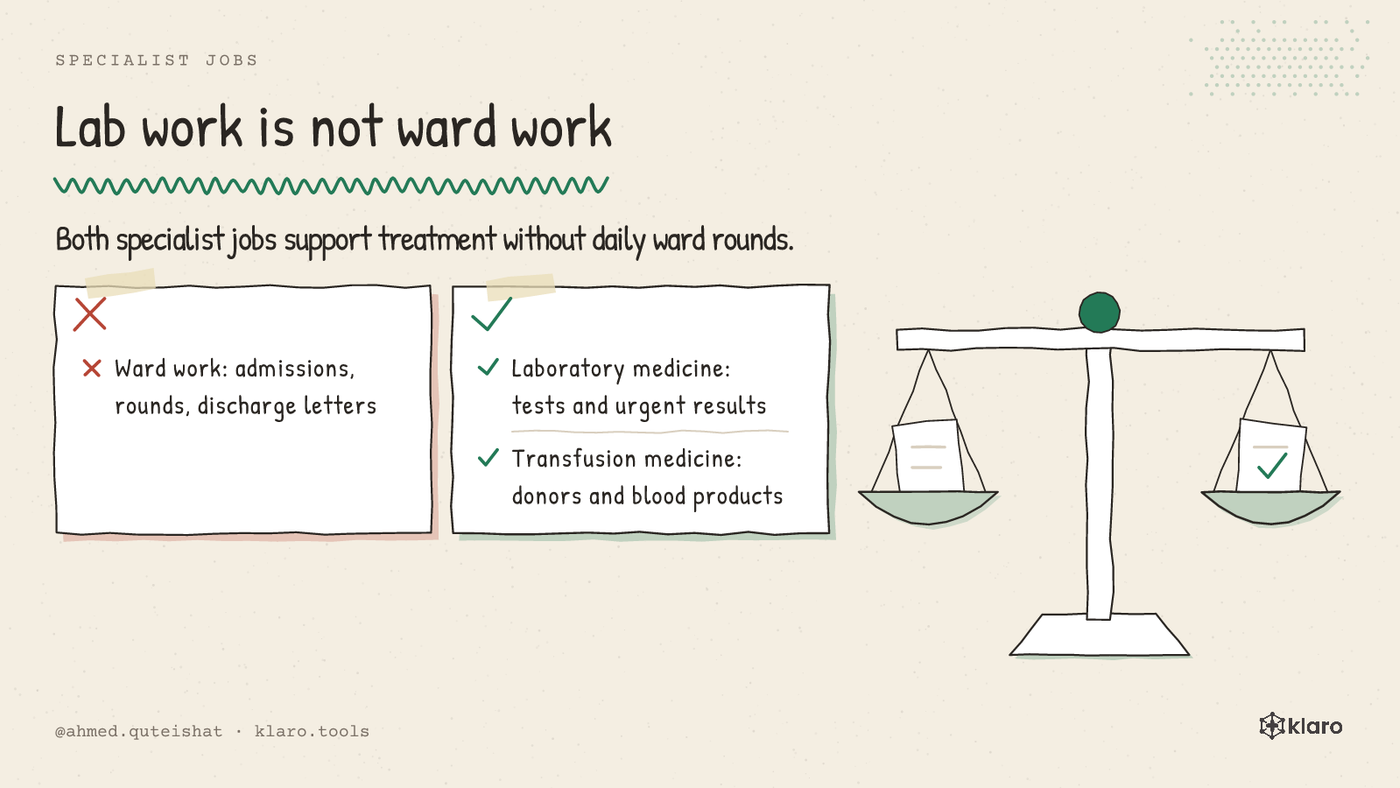
Laboratory medicine is about test results. You work with blood counts, cultures, hormones, coagulation tests, and the machines that produce them.
You speak with ward doctors when a result looks wrong. You also help choose the right test for a patient with fever, anaemia, or unexplained bleeding.
Transfusion medicine is about blood products and donors. The department checks blood groups, prepares blood for operations, and investigates dangerous transfusion reactions.
You may work in a hospital blood bank or a blood donation service. A surgeon calls before an operation. The laboratory team checks whether blood is ready.
These jobs are not ward jobs
This is the main difference. You are not spending each morning writing discharge letters for 25 inpatients or doing admissions in the emergency room.
Laboratory medicine has little direct patient contact in many departments. Transfusion medicine has more contact through donor sessions, apheresis, and hospital consultations.
You still need strong medical knowledge. A potassium result, a positive blood culture, or an incompatible blood unit can change treatment within minutes.
Who should apply
Apply if you enjoy diagnosis but dislike constant ward rounds. These departments suit doctors who like numbers, samples, machines, and careful written results.
They also suit doctors with pathology, microbiology, biochemistry, haematology, or blood bank experience. Put that work clearly on page 1 of your CV.
Do not apply only because you want an easy job. Night calls exist. Errors with blood products or urgent test results have serious consequences.
The training is real
Germany treats both as specialist training fields. The state medical chamber sets the detailed training rules and approves your completed training record.
The national model training rules list laboratory medicine and transfusion medicine as separate specialist fields. Your chamber uses its own current training rules when it reviews your papers.
Before you sign a contract, ask the senior doctor one direct question. Ask: “How many months of laboratory medicine or transfusion medicine can this department certify?”
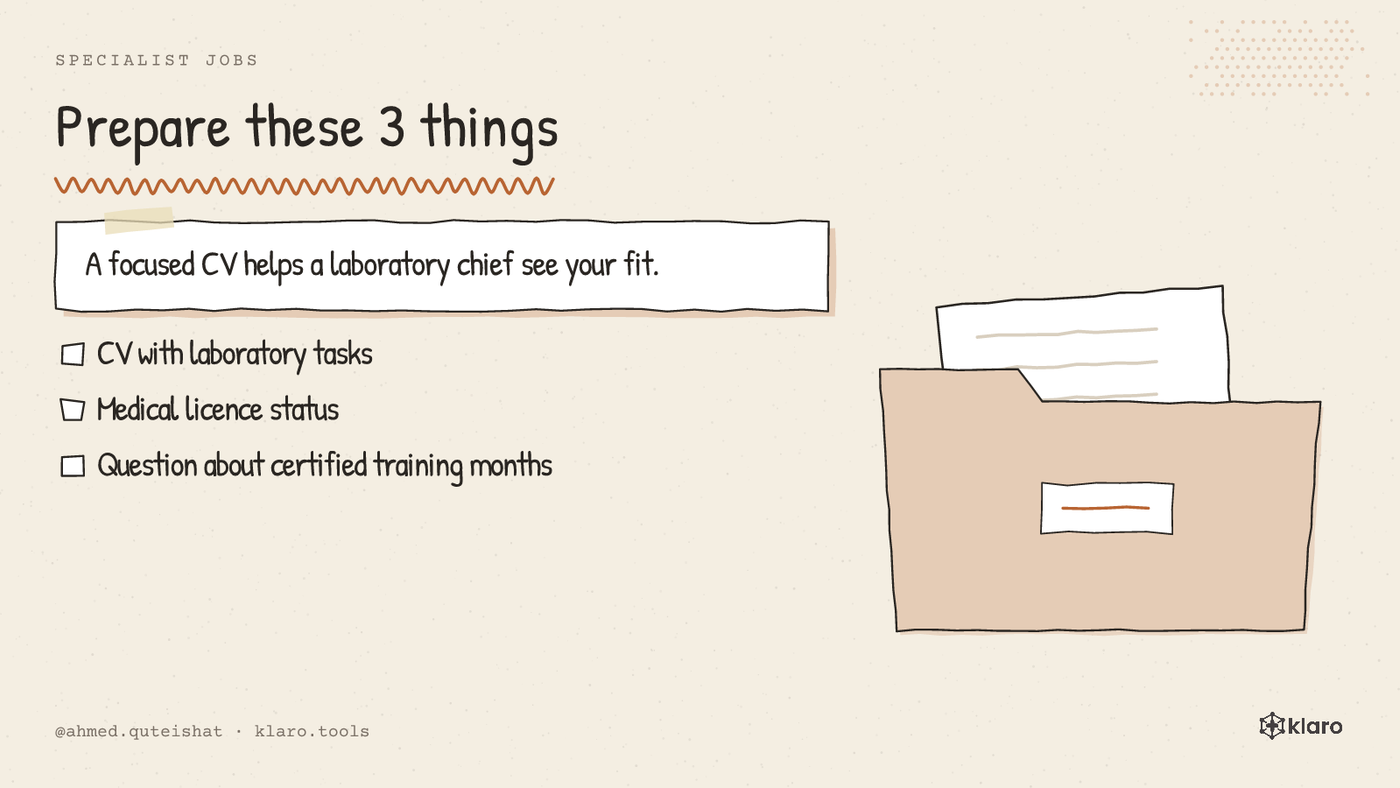
What to do now
- Add “laboratory medicine” and “transfusion medicine” to your German hospital search.
- Rewrite your CV opening with blood bank, microbiology, haematology, or laboratory tasks.
- Email the department head with your CV and medical licence status.
- Ask the state medical chamber which training rules apply in that state.
- Ask the department how many training months its senior doctor can certify.
Stand: 2026-10-03. This is a guide, not legal advice. Every German state has its own rules, and rules change. Check with your state's [medical chamber (Landesärztekammer)](https://www.bundesaerztekammer.de/aerztekammern) before you act.
Ahmed Quteishat — Founder, Klaro
Ahmed built Klaro after watching how much of a doctor's move to Germany gets lost in paperwork rather than medicine.