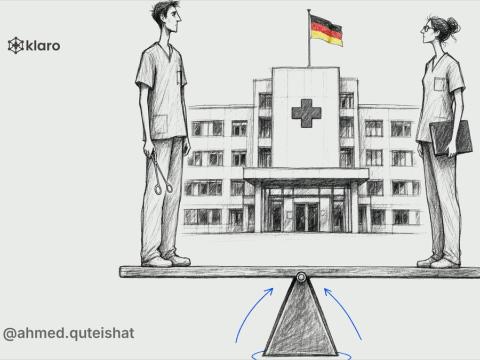
Do Surgeons Earn More Than Other Specialists in Germany?
Surgeons and other specialists receive the same base pay under German collective hospital contracts. Surgical duty shifts can raise the monthly total.
Ahmed Quteishat
Founder, Klaro
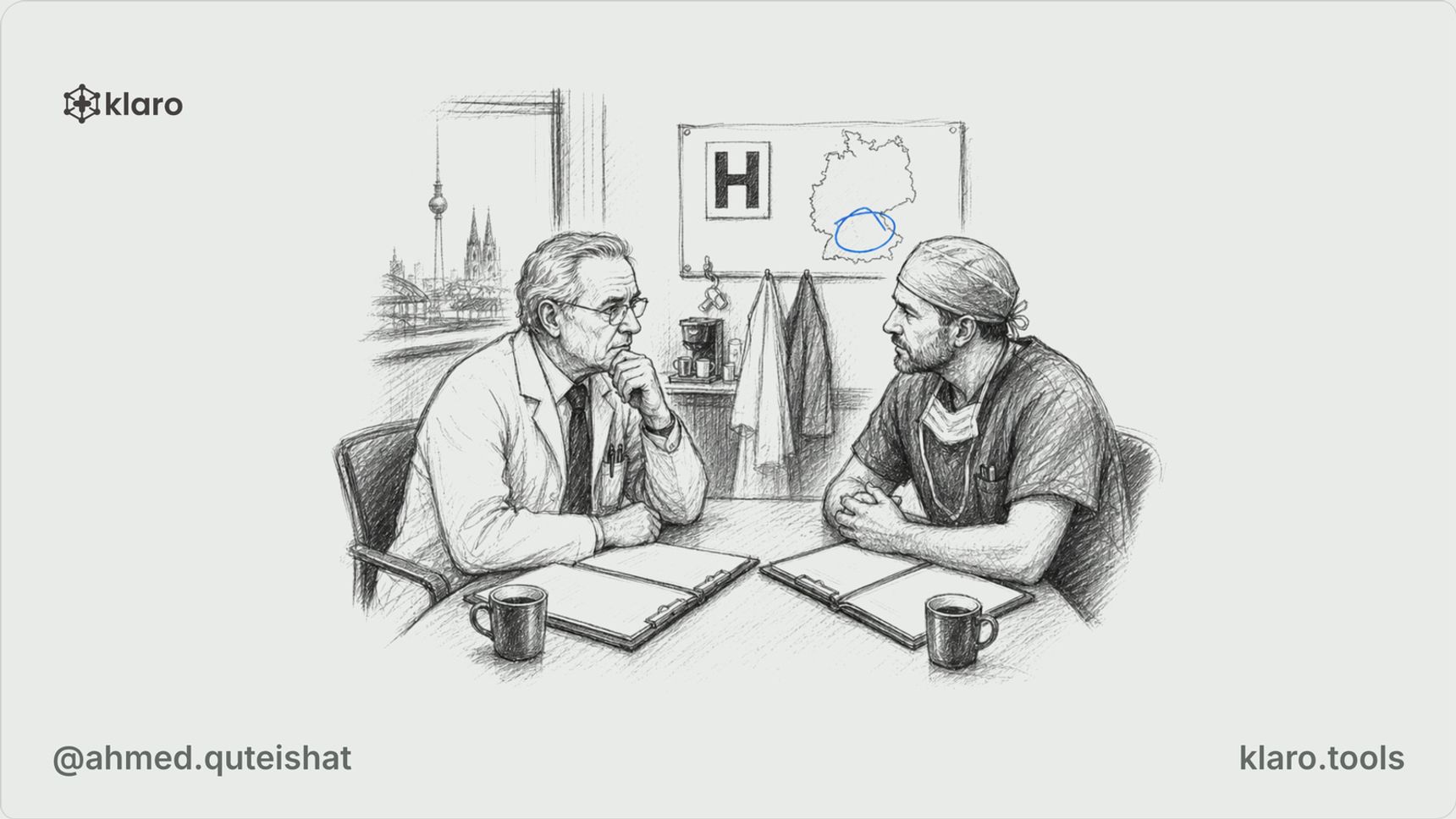
Surgeons and non-surgical specialists earn the same base pay in German collective hospital contracts. A Facharzt, meaning a doctor who completed specialist training, is paid by pay group and years in that group, not by whether the certificate says Chirurgie, Radiologie, Anästhesiologie, or Dermatologie. The larger payslip in surgery usually comes from night and weekend duty, called Bereitschaftsdienst.
This matters when you compare a surgical job in a district hospital with a dermatology job in Hamburg. The surgical doctor may take home more in a month with 6 weekend shifts. That does not mean the hospital values a specialist surgeon with a higher base salary.
Does a surgeon have a higher Facharzt base salary?
No. At municipal hospitals covered by TV-Ärzte/VKA, the collective agreement for doctors at local-government hospitals, specialist doctors sit in the same Facharzt pay group. A specialist in General Surgery and a specialist in Internal Medicine move through the table according to their time as a specialist.
The same basic structure applies at many university hospitals under TV-Ärzte TdL, the agreement for state university hospitals. A neurosurgeon, psychiatrist, anaesthetist, and paediatrician receive the table amount for their pay group and level. The HR department reads your contract, your Facharzt certificate, and your credited employment dates. It does not add money because you operate.
A private hospital without a collective agreement is the important exception. There, the employer can offer a higher base salary for a hard-to-fill post, such as vascular surgery in a rural area. You must read the gross monthly salary and every duty payment in the written contract. A job advert that says only "attractive pay" tells you nothing.
Why do surgical payslips look higher?
Surgical departments run operating theatres, emergency admissions, trauma calls, and intensive care cover around the clock. Their Dienstplan, the monthly duty rota, often contains more night and weekend duty than an outpatient-heavy department. Each duty shift brings extra payment under the collective agreement or the hospital contract.
Picture 2 specialists at the same municipal hospital. The orthopaedic surgeon covers the emergency department on Friday night and the trauma theatre on Sunday. The rheumatologist works weekdays in the clinic and has no duty that month. Their base salary is the same. The surgeon's payslip is higher because the rota contains paid shifts and supplements.
Anaesthesiology and internal medicine can also produce high monthly totals. An anaesthetist may cover theatre emergencies overnight. An internist may cover a medical ward, stroke unit, or intensive care unit on weekends. The pay difference follows the number and type of shifts, not the name of the specialty.
Which specialists earn more from duty?
Specialists in general surgery, orthopaedics and trauma surgery, anaesthesiology, internal medicine, gynaecology, and paediatrics commonly have substantial shift income in acute hospitals. The work includes admissions at 11pm, emergency calls from nurses, operations, births, blood gases, and handovers at 7am.
Dermatology, pathology, laboratory medicine, occupational medicine, and some radiology posts commonly have fewer overnight shifts. Their monthly total is therefore closer to the table salary. Radiology is a clear exception in hospitals with 24-hour CT and stroke cover, where overnight duty can be frequent.
More duty money is not free money. It comes with disrupted sleep, missed weekends, childcare problems, and responsibility for a ward when the senior doctor is at home. Compare the rota before you compare one month's gross pay.
What changes pay after you become a specialist?
Your next large pay jump usually comes from a new job title, not from changing from medicine to surgery. An Oberarzt, meaning a senior doctor, has a separate pay group in collective agreements. A senior doctor with responsibility for an operating theatre, intensive care unit, or ward earns more because of the role.
Extra qualifications can also lead to a better offer. A department may pay more for a specialist who covers a cardiac catheter lab, leads an intensive care unit, performs endoscopy, or fills an on-call gap. The written contract must name the function, the base salary, the duty category, and the payment for each shift.
Do not use a consultant's private-practice income to judge a hospital Facharzt job. A self-employed orthopaedic surgeon with a private clinic has a different business model from a hospital specialist under TV-Ärzte/VKA. They are not comparable payslips.
How to compare 2 specialist contracts
Compare the same 4 lines on both offers: pay group, experience level, number of duty shifts, and payment for each duty category. Ask for the last 3 completed Dienstplan sheets with names removed. They show whether "4 duties a month" means quiet home call or 4 overnight shifts in a busy emergency department.
Then ask whether the post is covered by TV-Ärzte/VKA, TV-Ärzte TdL, a church-hospital agreement, or an individual contract. The tariff name appears in the contract or job offer. Use the current pay table from Marburger Bund or the employer before you sign, because collective agreements are updated.
What to do before you sign
- Ask HR: "Which collective agreement, pay group, and experience level will appear in my Facharzt contract?"
- Ask the chief: "How many night, weekend, and on-call shifts did the last specialist on this rota work each month?"
- Ask for 3 anonymised Dienstplan sheets from the department, including a holiday month.
- Compare the base salary and each duty payment in writing before choosing surgery over another specialty.
Stand: 2026-09-23. This article is orientation, not legal advice. Rules differ by Bundesland and change — always confirm with your [Landesärztekammer](https://www.bundesaerztekammer.de/aerztekammern) before acting.
Ahmed Quteishat — Founder, Klaro
Ahmed built Klaro after watching how much of a doctor's move to Germany gets lost in paperwork rather than medicine.