OB/GYN Residency in Germany: Where IMG Entry Is Hardest
Foreign doctors enter OB/GYN in Germany more easily through smaller hospitals with delivery units than through city university clinics.
Ahmed Quteishat
Founder, Klaro
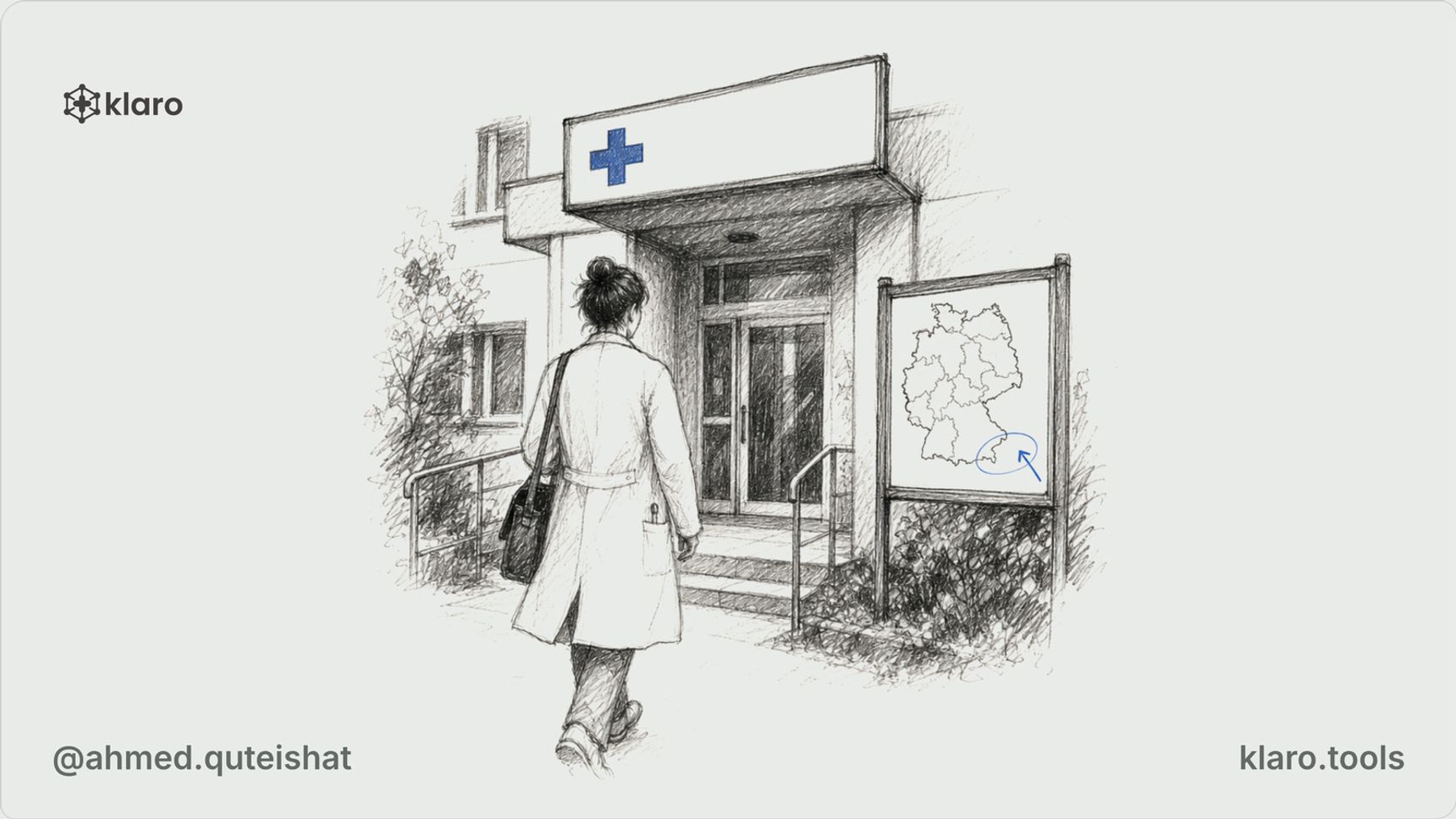
Foreign doctors should start OB/GYN in Germany at a smaller hospital with a delivery unit, not wait for a city university post. Gynäkologie und Geburtshilfe means gynaecology and obstetrics. The hardest applications are in Berlin, Munich, Hamburg, Cologne and university clinics, where one vacancy brings applicants who already worked on a German labour ward.
You will still see many online vacancies for Assistenzarzt posts, meaning junior doctor jobs. That does not mean every department wants a doctor who needs their first German reference, their first German night shift and their first delivery-room procedure. A vacancy can stay online while the chief waits for someone with German ward experience.
Why do OB/GYN vacancies and hard entry exist together?
They exist together because an OB/GYN department needs doctors for different jobs. A large city clinic needs someone who can take admissions at 2am, speak to a woman in labour, call the paediatrician, document a CTG and hand over to the morning team. The chief has less time to teach basic hospital German during a full delivery ward shift.
A job advertisement may list Approbation, German medical licence, and C1 German. At interview, the department also looks for a German Arbeitszeugnis, a reference letter from a German hospital, and a clear answer about delivery ward work. The licence opens the application. It does not replace a senior doctor's reference after 6 months on a German ward.
The delivery unit creates the biggest barrier. Births do not wait for office hours. On a night shift, the junior doctor reads CTG traces, examines women in labour, assists at a caesarean section, writes the operation note and speaks with midwives. Departments give these shifts first to applicants they believe can work with the team from day one.
Where is entry hardest?
Entry is hardest at university hospitals and famous city clinics. These departments receive applications from German graduates, doctors changing specialty, and junior doctors who already completed 1 or 2 years of surgery or OB/GYN in Germany. A new licence holder from abroad competes against people with local references and a German Logbuch, the training record for specialist training.
Berlin and Munich attract the largest number of applications because doctors want city life, international communities and partners' jobs. A department in these cities can choose applicants who already know the electronic chart, German discharge letters and local duty system. The open post is real, but the applicant pool is stronger.
A hospital with a neonatology unit and a high-risk pregnancy service also hires carefully. The work includes premature births, emergency caesarean sections, severe pre-eclampsia and postpartum bleeding. These clinics often prefer a doctor who has already worked in a German delivery unit, even when the advertisement says Berufseinsteiger, meaning career starter.
Where do foreign doctors get their first OB/GYN job?
Most foreign doctors get their first OB/GYN post at a smaller hospital outside the most popular cities. These hospitals still run a delivery unit, an operating theatre and an outpatient clinic. Their rota needs doctors for ward rounds, admissions, caesarean sections and night and weekend duty.
This is not a lesser start. At a smaller department, you see the full patient journey: ultrasound in the morning, a planned caesarean at noon, a postpartum ward round and an admission from the emergency department. Those 12 months give you German references and named procedures for your Logbuch.
The exception is an applicant with recent German OB/GYN experience. If you worked as a Hospitant, completed a nursing job on a maternity ward, or have a German reference from a related department, a city interview becomes more realistic. A Hospitation alone is weaker than paid ward work, because you do not carry responsibility for patients or write the clinical notes.
What does a department want to see?
The department wants a CV that makes its rota problem easy to understand. Put your Approbation or Berufserlaubnis, temporary work permit, at the top. Then list deliveries, caesarean sections, ultrasound, gynaecological operations, emergency admissions and night shifts with dates and hospital names.
Do not write only "OB/GYN resident." Write the work you did. For example: "Managed postpartum ward rounds, assisted in caesarean sections, performed antenatal ultrasound under supervision, and covered delivery ward night shifts." The chief can picture where you fit on Monday morning.
A short cover letter works when it names the hospital's work. If the hospital has a delivery unit, say you want regular labour ward and caesarean experience. If it has a breast centre, say what breast surgery or oncology work you have done. Sending the same letter to 40 departments tells the chief that you did not read the department website.
Will a smaller hospital count toward Facharzt training?
Yes, a smaller hospital can count toward Facharzt training if its senior doctor holds the required Weiterbildungsbefugnis, the training licence. The state medical chamber, called the Landesärztekammer, decides how many months that department may certify. A department can train you well and still certify only part of the required specialist time.
Ask this before you sign the contract: "How many months of Gynäkologie und Geburtshilfe can your department certify under the current Weiterbildungsbefugnis?" Ask for the answer by email. If the chief can certify 24 months, you know you will later need a move to another hospital for the remaining training.
The rules come from the Weiterbildungsordnung, the specialist training rules, of your state medical chamber. The Bundesärztekammer publishes a model training regulation, but each chamber issues its own binding version. Your Logbuch needs signatures for the procedures and rotations that your chamber requires.
What to do before you apply
- Apply first to OB/GYN departments with a delivery unit in smaller cities and towns, then use the German hospital reference from that job for city applications.
- Put Approbation or Berufserlaubnis, your German level, delivery ward tasks, caesarean sections and ultrasound work on the first page of your CV.
- Email the chief or senior doctor: "How many months can your department certify for OB/GYN specialist training?" Save the reply with the job contract.
- Read your Landesärztekammer's current Weiterbildungsordnung and download the OB/GYN Logbuch before your first working day.
Stand: 2026-09-25. This article is orientation, not legal advice. Rules differ by Bundesland and change — always confirm with your [Landesärztekammer](https://www.bundesaerztekammer.de/aerztekammern) before acting.
Ahmed Quteishat — Founder, Klaro
Ahmed built Klaro after watching how much of a doctor's move to Germany gets lost in paperwork rather than medicine.